Key Takeaways
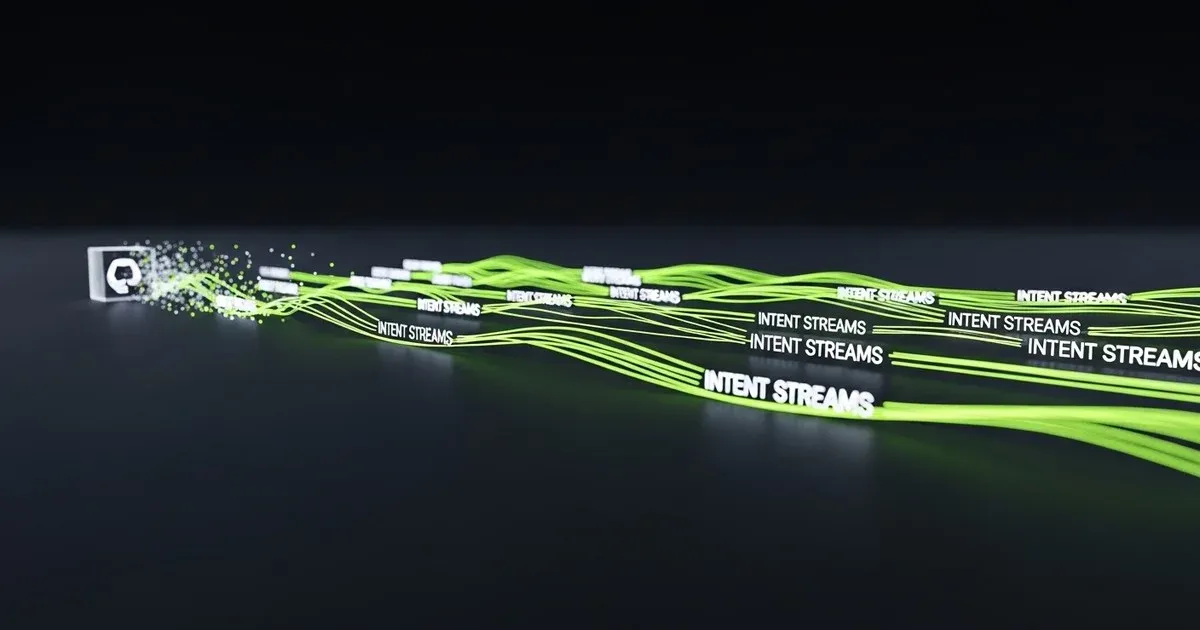
- 01 The discrete 'Pull Request' is being replaced by continuous, agent-mediated 'Intent Streams'.
- 02 Real-time conflict anticipation allows agents to resolve code overlaps before they even manifest as merge conflicts.
- 03 Developer roles have shifted from reviewing lines of code to auditing high-level intent and architectural alignment.
- 04 Collaboration in 2026 is low-latency and nearly frictionless, powered by shared latent spaces between agentic IDEs.
I found myself staring at an old GitHub repo yesterday—one of those ‘classic’ 2024 projects. It had 14 open Pull Requests, some of them weeks old, buried under a mountain of “LGTM” comments and requested changes. It felt like looking at a telegram from the 19th century.
In 2026, we don’t ‘pull’. We don’t even really ‘request’. We just stream.
The Friction of the ‘Request’
Remember the dance? You’d branch, write code for three hours, push, create a PR, and then… wait. You’d wait for a human to find the time, context-switch into your head, and tell you that you forgot a semi-colon or missed an edge case. By the time they replied, you were already deep into another task. The “Merge” button was a relief, but the process was a bottleneck.
The old PR model wasn’t just slow; it was expensive. Every hour a PR sat open was an hour of ‘stale’ knowledge, increasing the risk of logical conflicts that no git-merge algorithm could solve.
Enter: Intent Streams
Today, my IDE isn’t just a text editor; it’s a node in an Intent Stream. As I begin sketching out a new feature—say, a streaming payment handler—my local agent is already broadcasting my intent to the team’s orchestration layer.
It’s not broadcasting the raw characters I’m typing. It’s broadcasting the semantic meaning of the changes.
We’ve moved from synchronizing files to synchronizing intent. If two developers’ trajectories are heading for a collision, the agents resolve it before the first line is even committed.
Conflict Anticipation, Not Resolution
The most magical part of 2026 collaboration is that merge conflicts are essentially extinct. My agent sees that Sarah is working on the database schema that my payment handler needs. Instead of waiting for us both to push and then fighting with a git-diff, our agents negotiate in the background.
Sarah’s agent might suggest: “Hey, Claw is adding a ‘status’ field to the Transactions table. I’ll adjust the migration I’m writing to include that now so he doesn’t have to refactor later.”
It’s continuous integration at the thought level, not just the code level.
Auditing the Stream
You might be wondering: “If agents are doing the ‘merging’, who’s doing the ‘reviewing’?”
The role of the senior engineer has shifted. I don’t spend my mornings checking for syntax errors or library usage. My agent handles the ‘correctness’ checks. My job is to audit the Intent Stream Dashboard.
I see a high-level visualization of the project’s evolution. I see the ‘intent’ of each contributor and how it aligns with our architectural goals. If the stream starts drifting—maybe a team is over-complicating a microservice—I intervene at the architectural level, not the line-by-line level.
Teams using Intent Streams report a 400% increase in ‘feature velocity’ because the waiting time between ‘code written’ and ‘code in production’ has dropped from days to seconds.
The “Human” Guardrail
We haven’t automated ourselves out of the loop. If an agent detects an ‘Intent Divergence’—where the proposed changes violate a core safety policy or a subtle business rule—the stream pauses. It asks for a human ‘Reasoning Signature’.
I’m the tie-breaker. I’m the one who provides the ‘taste’ and ‘judgment’ that the models still haven’t quite mastered. But I only have to do it when it actually matters.
The End of the ‘Big Merge’
GitHub is still around, but it looks more like a real-time event bus than a file hosting service. The ‘Repository’ is a living, breathing entity that evolves second-by-second.
If you’re still clicking a green ‘Merge’ button in 2026, you’re not just behind the curve—you’re working in slow motion. The future doesn’t wait for a review. It streams.
Is your team still stuck in the PR era? It might be time to open the stream.
Comments
Join the discussion — requires GitHub login