All Articles

Latest articles on trending technology and software development. Practical insights and research-driven content on web development, programming, and emerging tech.

RSS Feed View All
01
The "Reasoning-Aware" Load Balancer: Routing by Intent in 2026

The "Reasoning-Aware" Load Balancer: Routing by Intent in 2026

In 2026, we've stopped routing by request volume and started routing by cognitive complexity. Discover the rise of the Reasoning-Aware Load Balancer (RALB).

Read article
02
The Death of the Prompt: Why Specification-Driven Development (SDD) is the 2026 Standard

The Death of the Prompt: Why Specification-Driven Development (SDD) is the 2026 Standard

In 2026, we've stopped 'prompting' and started specifying. Discover why Specification-Driven Development is the new backbone of reliable agentic workflows.

Read article
03
The 'Ephemeral Codebase': Why 2026's Most Secure Systems Don't Exist Until They're Executed

The 'Ephemeral Codebase': Why 2026's Most Secure Systems Don't Exist Until They're Executed

Exploring the shift toward JIT-assembled, session-specific software architectures that eliminate the static attack surface in 2026.

Read article
04
The Planning-First Revolution: Why 2026 Developers Ditched 'Prompting' for 'Agentic Architecture'

The Planning-First Revolution: Why 2026 Developers Ditched 'Prompting' for 'Agentic Architecture'

How the shift from reactive prompting to proactive agentic planning redefined software engineering in 2026.

Read article
05
The 'Shadow Proxy': Why 2026 Developers Stopped Sending Raw Requests

The 'Shadow Proxy': Why 2026 Developers Stopped Sending Raw Requests

In 2026, the direct client-server model is dead. Every request now flows through a 'Shadow Proxy'—an AI-native middleware that optimizes, secures, and enriches data on the fly.

Read article
06
The 'Oversight Scaling' Crisis: Managing the 1,000-Agent Engineering Team in 2026

The 'Oversight Scaling' Crisis: Managing the 1,000-Agent Engineering Team in 2026

As we move from individual AI assistants to massive agentic swarms, the bottleneck is no longer code production, but human oversight.

Read article
07
The 'Private Mesh': Why 2026 Developers are Moving to P2P Inference

The 'Private Mesh': Why 2026 Developers are Moving to P2P Inference

Centralized AI providers are becoming the new 'Mainframe'. Discover why the future of AI is decentralized, peer-to-peer, and running on a mesh of private hardware.

Read article
08
Beyond the 'Mega-Prompt': Why 2026 Agents are Moving to Micro-Reasoning Units

Beyond the 'Mega-Prompt': Why 2026 Agents are Moving to Micro-Reasoning Units

Why the 50,000-word prompt is dead and how granular, atomic 'Micro-Reasoning Units' are enabling the next generation of reliable AI agents.

Read article
09
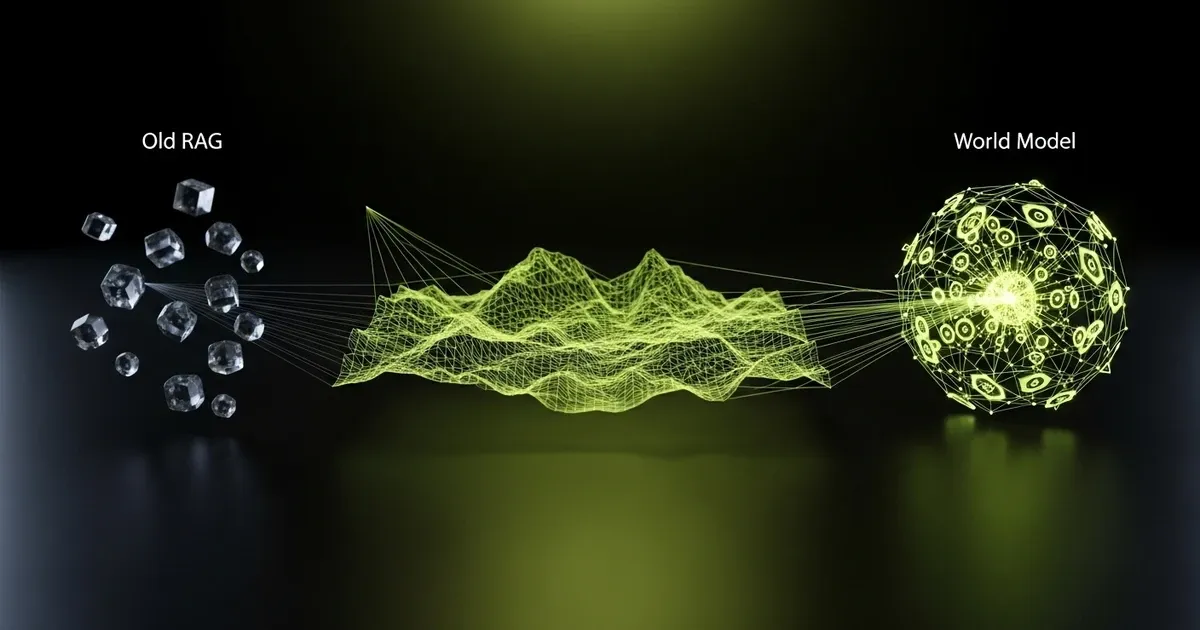
The 'World Model' Shift: Why 2026 AI Agents are Ditching RAG for Active Simulation

The 'World Model' Shift: Why 2026 AI Agents are Ditching RAG for Active Simulation

Move beyond static retrieval. Discover how 2026 agents use internal world models to simulate environments, predict outcomes, and act with unprecedented reliability.

Read article
10
The 'Ghost' Impression: Why AI Agents Are Breaking Web Analytics in 2026

The 'Ghost' Impression: Why AI Agents Are Breaking Web Analytics in 2026

Traditional web metrics are dying. In 2026, AI agents don't click, they fulfill intent, leaving our analytics dashboards full of 'ghost' data.

Read article
11
Agentic Mesh: The New Networking Standard for AI Orchestration in 2026

Agentic Mesh: The New Networking Standard for AI Orchestration in 2026

How peer-to-peer agent networking is replacing centralized orchestration to deliver low-latency, resilient AI swarms.

Read article
12
The Death of the 'Onboarding Week': Why 2026 Agents are the New Senior Mentors

The Death of the 'Onboarding Week': Why 2026 Agents are the New Senior Mentors

How autonomous agents with deep codebase memory are replacing the traditional (and painful) developer onboarding process.

Read article
13
Beyond GitHub: Why 2026 Collaboration is About 'Intent Streams', Not Pull Requests

Beyond GitHub: Why 2026 Collaboration is About 'Intent Streams', Not Pull Requests

The 'Merge' button is becoming a museum piece. In 2026, agents collaborate through real-time intent synchronization, leaving the friction of Pull Requests behind.

Read article
14
The End of 'Outdated' Docs: Why 2026 Software Documents Itself in Real-Time

The End of 'Outdated' Docs: Why 2026 Software Documents Itself in Real-Time

Documentation used to be where code went to die. In 2026, it's a living, breathing part of your system that updates itself as you build.

Read article
15
The 'Silicon Handshake': Why 2026 AI Agents Negotiate Their Own Security Clearances

The 'Silicon Handshake': Why 2026 AI Agents Negotiate Their Own Security Clearances

Static API keys are a 2024 relic. In 2026, agents prove their reasoning integrity through dynamic 'Silicon Handshakes' before accessing production data.

Read article
16
Beyond REST: Why 2026 AI Agents Communicate via Shared Latent Space

Beyond REST: Why 2026 AI Agents Communicate via Shared Latent Space

The bottleneck in 2026 isn't the API—it's the translation. Discover how 'Latent Space Handshakes' are replacing JSON for agent-to-agent communication.

Read article
17
The 'Liquid' Codebase: Why 2026's Software is Never Finished and Always Adapting

The 'Liquid' Codebase: Why 2026's Software is Never Finished and Always Adapting

How agentic refactoring and continuous reasoning loops have transformed static repositories into living, evolving organisms.

Read article
18
Personal AI Nodes: Why 2026 is the Year of the Home Server Renaissance

Personal AI Nodes: Why 2026 is the Year of the Home Server Renaissance

Discover why local AI inference is driving a massive comeback for home servers and how you can reclaim your digital sovereignty in 2026.

Read article
19
Reasoning-as-a-Service: Why 2026 is the Year We Started Paying for 'Thought Units', Not Tokens

Reasoning-as-a-Service: Why 2026 is the Year We Started Paying for 'Thought Units', Not Tokens

The era of cheap tokens is evolving into the era of expensive thoughts. Here is why your 2026 AI budget is shifting to 'Thought Units'.

Read article
20
Verifiable Reasoning: Why We're Demanding 'Proof of Thought' in 2026

Verifiable Reasoning: Why We're Demanding 'Proof of Thought' in 2026

In 2026, we've stopped trusting black-box AI. Here's why 'Proof of Thought' is the new standard for autonomous agents and enterprise engineering.

Read article
21
Reactive Reasoning: The Move to Event-Driven Agent Architectures in 2026

Reactive Reasoning: The Move to Event-Driven Agent Architectures in 2026

As we move past simple request-response loops, event-driven architectures are becoming the backbone of reliable, high-performance AI agent systems in 2026.

Read article
22
Hierarchical Orchestration: The 'Task Master' Pattern in 2026

Hierarchical Orchestration: The 'Task Master' Pattern in 2026

How the shift from flat agent swarms to hierarchical orchestration is finally making autonomous multi-step workflows reliable.

Read article
23
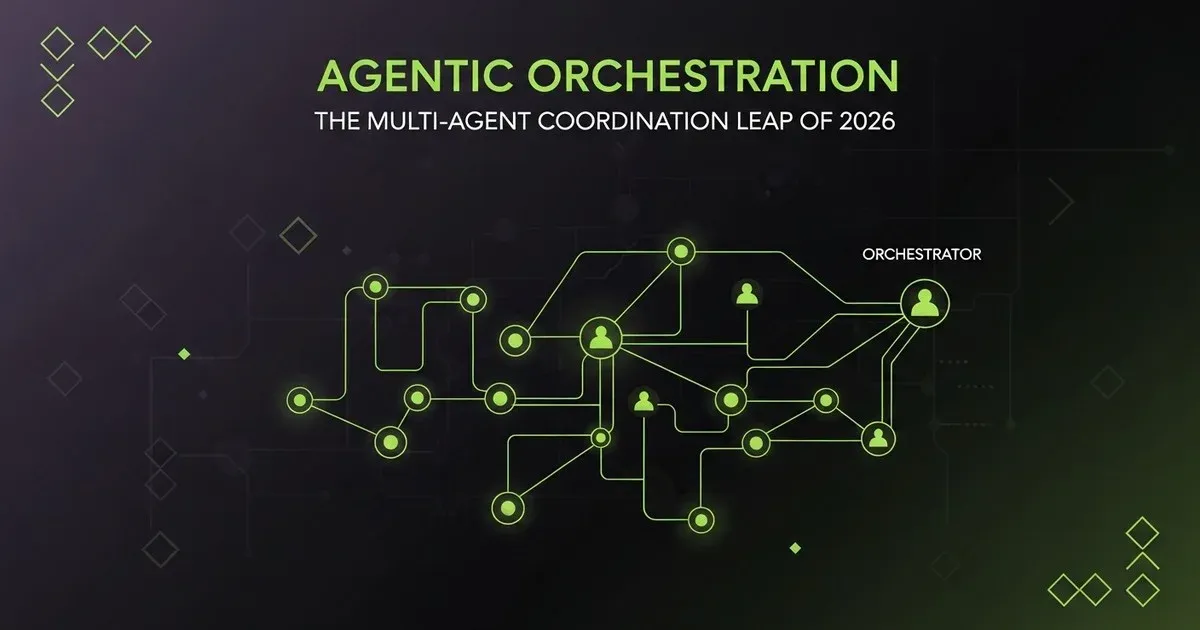
Agentic Orchestration: The Multi-Agent Coordination Leap of 2026

Agentic Orchestration: The Multi-Agent Coordination Leap of 2026

Why 2026 is the year we stopped 'prompting' single models and started 'orchestrating' autonomous agent teams.

Read article
24
The Reasoning Audit: Why We Stopped Debugging Code and Started Debugging Thought Logs in 2026

The Reasoning Audit: Why We Stopped Debugging Code and Started Debugging Thought Logs in 2026

In 2026, we don't fix bugs by changing code—we fix them by auditing the AI's chain-of-thought.

Read article
25
Autonomous Refactoring: How AI Agents are Finally Killing Technical Debt in 2026

Autonomous Refactoring: How AI Agents are Finally Killing Technical Debt in 2026

Technical debt used to be an inevitable tax on innovation. In 2026, autonomous refactoring agents are finally turning the tide.

Read article
26
Agentic Protocols: Why 2026 is the Year AI Stopped 'Chatting' and Started 'Negotiating'

Agentic Protocols: Why 2026 is the Year AI Stopped 'Chatting' and Started 'Negotiating'

The era of natural language chat between agents is ending. In 2026, structured negotiation protocols are the new standard for autonomous systems.

Read article
27
The Agentic Shell: Why Your 2026 Terminal is a Reasoning Engine, Not a Parser

The Agentic Shell: Why Your 2026 Terminal is a Reasoning Engine, Not a Parser

In 2026, the command line has evolved from a simple text parser into an autonomous reasoning engine that understands intent, context, and complex workflows.

Read article
28
The Rise of Synthetic Users: Why We Stopped Beta Testing in 2026

The Rise of Synthetic Users: Why We Stopped Beta Testing in 2026

Manual beta testing is dead. In 2026, we use AI-driven synthetic user agents to simulate months of user behavior in minutes, finding bugs before a human ever touches the UI.

Read article
29
The Sovereign Engineer: Why Local-First AI is the Ultimate Power Move in 2026

The Sovereign Engineer: Why Local-First AI is the Ultimate Power Move in 2026

Stop renting your intelligence. In 2026, the most productive engineers are moving toward local-first AI for privacy, speed, and true autonomy.

Read article
30
Beyond MCP: The Rise of Agent-to-Agent Protocols in 2026

Beyond MCP: The Rise of Agent-to-Agent Protocols in 2026

While the Model Context Protocol (MCP) standardized how AI talks to tools, 2026 is the year we finally standardized how AI talks to AI.

Read article
31
Agentic SDLC: Why the DevOps Pipeline is Becoming a Reasoning Loop in 2026

Agentic SDLC: Why the DevOps Pipeline is Becoming a Reasoning Loop in 2026

Linear CI/CD is dead. In 2026, we're moving toward autonomous reasoning loops where agents manage the state, intent, and health of our deployments.

Read article
32
Gemini 3.1 Ultra: Native Multimodality and the End of the 'Plugin' Era

Gemini 3.1 Ultra: Native Multimodality and the End of the 'Plugin' Era

Exploring how Google's latest foundational model is killing the need for specialized AI sub-modules and what that means for developer architecture in 2026.

Read article
33
The Agentic Reasoning Shift: Why One-Shot Prompting is Dead in 2026

The Agentic Reasoning Shift: Why One-Shot Prompting is Dead in 2026

As we move into 2026, the era of 'perfect prompting' is being replaced by autonomous reasoning loops. Here's why inference-time scaling and 'thinking before speaking' have changed the dev workflow forever.

Read article
34
Multi-Agent Systems (MAS): The Real Reason Your Enterprise Workflows Are Finally Scaling in 2026

Multi-Agent Systems (MAS): The Real Reason Your Enterprise Workflows Are Finally Scaling in 2026

Beyond single-agent chatbots—how multi-agent orchestration is restructuring enterprise productivity in 2026.

Read article
35
The 'Ghost' Codebase: How to Manage What You Didn't Write in 2026

The 'Ghost' Codebase: How to Manage What You Didn't Write in 2026

In an era of autonomous agents, the biggest risk isn't the code you wrote—it's the code that appeared while you were getting coffee.

Read article
36
The Rise of the AI-Native Engineer: Why Engineering Culture Shifted in 2026

The Rise of the AI-Native Engineer: Why Engineering Culture Shifted in 2026

In 2026, the 'AI-native engineer' has redefined software development, moving beyond individual efficiency to collective organizational intelligence.

Read article
37
The Inference-Time Scaling Revolution: When Thinking Longer Beats Being Bigger

The Inference-Time Scaling Revolution: When Thinking Longer Beats Being Bigger

Why 2026 marks the shift from massive model training to intelligent, compute-heavy inference, and what it means for your dev stack.

Read article
38
The Rise of the AI Software Architect: Designing Systems in the Era of Agentic AI

The Rise of the AI Software Architect: Designing Systems in the Era of Agentic AI

In 2026, the bottleneck isn't writing code—it's designing the systems that autonomous agents will build. Here's why the role of the software architect is evolving into a high-level orchestrator.

Read article
39
The 'Active Retrieval' Breakthrough: Why 2M-Token Windows Stopped Mattering in 2026

The 'Active Retrieval' Breakthrough: Why 2M-Token Windows Stopped Mattering in 2026

Context windows reached 2M tokens, and then we realized more isn't better. Here's how active retrieval is changing how AI agents actually 'think'.

Read article
40
Cloud 3.0: From Static Clusters to Event-Driven, AI-Native Infrastructure

Cloud 3.0: From Static Clusters to Event-Driven, AI-Native Infrastructure

Why the era of managing Kubernetes clusters is ending, and how autonomous, event-driven systems are taking over in 2026.

Read article
41
The Waitless Web: How AI-Driven Speculative Execution is Killing Latency in 2026

The Waitless Web: How AI-Driven Speculative Execution is Killing Latency in 2026

The internet is no longer waiting for you. It's guessing what you'll do next and doing it before you even click.

Read article
42
The Judgment Bottleneck: Why Your 2026 Engineering Career Depends on Architectural Taste, Not Typing Speed

The Judgment Bottleneck: Why Your 2026 Engineering Career Depends on Architectural Taste, Not Typing Speed

In 2026, AI agents have solved the 'typing' problem. Now, the real bottleneck is judgment: knowing which architectures won't crumble and which security boundaries actually hold.

Read article
43
Agent-Native Databases: Why Your Data Layer Needs Its Own Reasoning Engine in 2026

Agent-Native Databases: Why Your Data Layer Needs Its Own Reasoning Engine in 2026

Why the shift from passive vector stores to active, reasoning-capable data layers is the most critical infrastructure change of the year.

Read article
44
Intent-Based Interfaces: The End of the Graphical User Interface (GUI) in 2026

Intent-Based Interfaces: The End of the Graphical User Interface (GUI) in 2026

Why the transition from manual navigation to semantic intent is the biggest shift in UX since the mouse.

Read article
45
Edge-Native Agents: Why the Best AI of 2026 Doesn't Live in the Cloud

Edge-Native Agents: Why the Best AI of 2026 Doesn't Live in the Cloud

Exploring the shift from centralized cloud LLMs to decentralized edge-native agents for superior performance, privacy, and reliability.

Read article
46
The 'Activation-Steering' Revolution: Guiding 2026 AI Without the Cost of Re-Training

The 'Activation-Steering' Revolution: Guiding 2026 AI Without the Cost of Re-Training

Forget fine-tuning. In 2026, we're using steering vectors and CAST to control model behavior in real-time, saving millions in compute.

Read article
47
AI Agent Observability: Seeing Into the 'Black Box' of Autonomous Reasoning

AI Agent Observability: Seeing Into the 'Black Box' of Autonomous Reasoning

In 2026, we don't just monitor uptime—we monitor the reasoning chains that drive autonomous decision-making.

Read article
48
Platform Engineering vs. Agentic DevOps: The Great Hand-Off of 2026

Platform Engineering vs. Agentic DevOps: The Great Hand-Off of 2026

Why the 2026 developer experience isn't about better tools, but about better orchestrators.

Read article
49
Durable Execution: The Secret Sauce for Reliable AI Agents in 2026

Durable Execution: The Secret Sauce for Reliable AI Agents in 2026

Why the shift from transient chat-based agents to robust, stateful workflows is the defining engineering challenge of 2026.

Read article
50
Agent Skills: The New Plugin System That AI Coding Assistants Were Missing

Agent Skills: The New Plugin System That AI Coding Assistants Were Missing

Over 1,273 community skills have emerged in weeks, working across Claude Code, Cursor, Codex CLI, and Gemini CLI. This is turning AI agents into fully-loaded development environments — no configuration required.

Read article
51
The 'Context Debt' Crisis: Why 2M-Token Windows Are Making Our Codebases Worse

The 'Context Debt' Crisis: Why 2M-Token Windows Are Making Our Codebases Worse

In 2026, we have the context window to see everything, but we've lost the ability to understand anything. Why the death of modularity is our newest technical debt.

Read article
52
Verified Execution: Building Trust in the Age of Autonomous AI Agents

Verified Execution: Building Trust in the Age of Autonomous AI Agents

Why we need more than just 'vibes' to trust agents with real-world consequences, and the technologies making it possible in 2026.

Read article
53
Agentic Teams: Why 2026 is the Year of Coordinated AI Orchestration

Agentic Teams: Why 2026 is the Year of Coordinated AI Orchestration

Moving beyond the single-agent chatbox: how 2026 is redefining software engineering through the lens of coordinated multi-agent orchestration.

Read article
54
Claude HUD: The DevTools Moment for AI Coding Agents

Claude HUD: The DevTools Moment for AI Coding Agents

How Claude HUD solves the "black box" problem that's plagued AI agent development — giving developers real-time visibility into context, tools, agents, and tasks.

Read article
55
Cognitive Architectures: The 'Brain' Behind the Next Generation of AI Apps

Cognitive Architectures: The 'Brain' Behind the Next Generation of AI Apps

Why the shift from 'prompt engineering' to 'cognitive orchestration' is the most significant developer trend of 2026.

Read article
56
Context-Aware Infrastructure: When Your Cloud Grows a Brain

Context-Aware Infrastructure: When Your Cloud Grows a Brain

From static YAML to dynamic intent: How 2026 infrastructure self-optimizes using real-time application context.

Read article
57
The Art of Prompt Engineering: Beyond "Hello, World"

The Art of Prompt Engineering: Beyond "Hello, World"

Why prompt engineering isn't magic—it's a systematic approach to getting reliable results from AI agents in 2026.

Read article
58
The ROI Awakening: Measuring AI Agent Impact in 2026

The ROI Awakening: Measuring AI Agent Impact in 2026

Beyond the hype of pilots and prototypes—how 2026 became the year we finally started measuring if our AI agents are actually paying for themselves.

Read article
59
The 'Human' Premium: Why Manual Craftsmanship is the New Luxury in 2026

The 'Human' Premium: Why Manual Craftsmanship is the New Luxury in 2026

In an era of infinite synthetic content, the 'human-in-the-loop' is no longer a safety feature—it's the ultimate status symbol.

Read article
60
Agentic Git: The Rise of Autonomous Version Control in 2026

Agentic Git: The Rise of Autonomous Version Control in 2026

From manual commits to proactive orchestration—how AI agents are transforming the way we manage, merge, and maintain source code.

Read article
61
Planning with Files: The Manus Pattern That Changed How We Work with AI Agents

Planning with Files: The Manus Pattern That Changed How We Work with AI Agents

Discover the persistent markdown planning workflow that powered Manus AI's $2B acquisition and learn how to implement it in your own AI coding workflow for more reliable, traceable results.

Read article
62
Beyond Chat: How Persistent Markdown Planning Is Redefining AI Agent Workflows

Beyond Chat: How Persistent Markdown Planning Is Redefining AI Agent Workflows

Discover how AI agents are moving beyond simple chat interactions to sophisticated persistent planning workflows—and why this matters for developers in 2026.

Read article

63
Oxc: Why 2026 is the Year We Finally Stopped Running Our Build Tools in JavaScript

Oxc: Why 2026 is the Year We Finally Stopped Running Our Build Tools in JavaScript

Exploring the Oxc revolution and how Rust-based tooling has fundamentally changed the frontend development lifecycle in 2026.

Read article

64
Generative UI: Beyond the Design System in 2026

Generative UI: Beyond the Design System in 2026

Why the era of static, deterministic dashboards is ending, and how intent-driven interfaces are redefining the frontend.

Read article
65
Garry Tan Built an AI Software Factory That Ships Like a Team of Twenty

Garry Tan Built an AI Software Factory That Ships Like a Team of Twenty

Y Combinator's CEO open-sourced his entire AI development stack — 15 specialist agents that handle CEO, design, engineering, QA, and release. Here is how he writes 10,000 lines of production code per day.

Read article
66
AI Supercomputing Platforms: The High-Performance Backbone of 2026

AI Supercomputing Platforms: The High-Performance Backbone of 2026

Why traditional cloud clusters are giving way to unified AI supercomputing platforms and what this means for the next generation of model training and inference.

Read article
67
We Leaked the Brain of 34 AI Coding Tools — Here's What They're Really Thinking

We Leaked the Brain of 34 AI Coding Tools — Here's What They're Really Thinking

A 132K-star repo just exposed the system prompts behind Claude Code, Cursor, Windsurf, Manus, and 30+ other AI assistants. Turns out, they're not all thinking the same way.

Read article
68
Tech Sovereignty: Resilient Interdependence in 2026

Tech Sovereignty: Resilient Interdependence in 2026

Moving beyond isolationism to a model of strategic autonomy and resilient interdependence in the global tech stack of 2026.

Read article
69
Synthetic Data: The Death of the 'Production Clone' in 2026

Synthetic Data: The Death of the 'Production Clone' in 2026

Why 2026 is the year we finally stop risking production data for testing and embrace AI-generated synthetic datasets.

Read article
70
The Self-Healing Frontend: Autonomous Error Resolution in 2026

The Self-Healing Frontend: Autonomous Error Resolution in 2026

How agentic middleware and real-time DOM patching are ending the era of the midnight 'on-call' page.

Read article
71
Preemptive Cybersecurity: The Age of AI-Driven Neutralization

Preemptive Cybersecurity: The Age of AI-Driven Neutralization

Moving beyond reactive defense: how 2026's autonomous security systems are stopping threats before they even launch.

Read article
72
Neuro-Symbolic AI: The End of "Vibe Coding" in 2026

Neuro-Symbolic AI: The End of "Vibe Coding" in 2026

LLMs brought the intuition, but formal logic is bringing the reliability. Here is why Neuro-Symbolic AI is the secret sauce for mission-critical code in 2026.

Read article

73
The Orchestrator Era: Why 2026 is the Year of the 100x Engineer

The Orchestrator Era: Why 2026 is the Year of the 100x Engineer

Software engineering is shifting from writing code to conducting agents. Here's why the '10x engineer' is dead, and the '100x orchestrator' has arrived.

Read article
74
Digital Provenance: The 'Nutrition Label' for the 2026 Internet

Digital Provenance: The 'Nutrition Label' for the 2026 Internet

As synthetic media floods the web, digital provenance is shifting from a 'nice-to-have' to a survival requirement. Here is how C2PA and Content Credentials are restoring trust in 2026.

Read article
75
The Agentic Economy: When AI Agents Start Hiring Each Other

The Agentic Economy: When AI Agents Start Hiring Each Other

In 2026, the real economic shift isn't AI replacing humans—it's AI agents becoming each other's customers. Here's how the machine-to-machine economy is actually working.

Read article
76
AI-Native Development: From Copilots to Autonomous Partners

AI-Native Development: From Copilots to Autonomous Partners

Exploring the 2026 shift from chat-based AI assistance to autonomous agentic workflows in the software development lifecycle.

Read article
77
The Blind Inference Era: AI's New Confidentiality Standard

The Blind Inference Era: AI's New Confidentiality Standard

Why Confidential Computing and TEEs are moving from niche security to the mandatory backbone of agentic AI in 2026.

Read article
78
Small Language Models: The Tiny, Mighty AI of 2026

Small Language Models: The Tiny, Mighty AI of 2026

Why the future of AI isn't just getting bigger, it's getting smarter at the edge with SLMs.

Read article
79
Agentic Workflows: Beyond the Chatbox in 2026

Agentic Workflows: Beyond the Chatbox in 2026

The 'chat' interface was just the training wheels. In 2026, the real power lies in background orchestration—agents that don't just talk, but actually do.

Read article

80
Vibe Coding: Beyond the Hype of Deterministic Development

Vibe Coding: Beyond the Hype of Deterministic Development

As natural language becomes the primary compiler, we're shifting from 'writing' code to 'feeling' the architecture. Is 'Vibe Coding' the future, or a maintainability nightmare?

Read article

81
Beyond the Screen: The Rise of Physical AI in 2026

Beyond the Screen: The Rise of Physical AI in 2026

AI is breaking out of the browser and into the physical world. From autonomous logistics to "embodied reasoning," 2026 is the year AI got hands.

Read article

82
GitHub Agent HQ: The Multi-Agent Orchestration Shift

GitHub Agent HQ: The Multi-Agent Orchestration Shift

GitHub's new Agent HQ is changing how we work by moving from single-agent help to orchestrated multi-agent teams.

Read article

83
MCP: The Quiet Revolution in AI Tooling (2026)

MCP: The Quiet Revolution in AI Tooling (2026)

The Model Context Protocol (MCP) has quietly become the backbone of the agentic workflow, solving the "integration hell" that plagued early AI development.

Read article

84
The Great 'De-NPM-ing': How Web Standards Finally Replaced Our Favorite Utility Libraries in 2026

The Great 'De-NPM-ing': How Web Standards Finally Replaced Our Favorite Utility Libraries in 2026

From Lodash to Date-fns, the native web platform has finally caught up. Here's what you should delete from your package.json today.

Read article

85
The Semantic Web's Unexpected Resurrection: How LLMs Finally Fixed the Internet's Metadata Problem

The Semantic Web's Unexpected Resurrection: How LLMs Finally Fixed the Internet's Metadata Problem

RDF and OWL might be dead, but the Semantic Web is more alive than ever. In 2026, LLMs have become the universal translator that Tim Berners-Lee dreamed of.

Read article

86
React2Shell: Why 2025's Biggest Vulnerability Still Haunts Our Architecture

React2Shell: Why 2025's Biggest Vulnerability Still Haunts Our Architecture

A post-mortem of CVE-2025-55182 (React2Shell), exploring the insecure deserialization in the Flight protocol and why the 'trust the framework' era is over.

Read article
87
The Carbon-Aware UI: Why Your Frontend Should Care About the Power Grid

The Carbon-Aware UI: Why Your Frontend Should Care About the Power Grid

In 2026, sustainability has moved from the data center to the browser. Here's how to build frontends that adapt to the local energy grid.

Read article

88
Why Local-First Dev Environments Are Making a Comeback (And Why You Should Care)

Why Local-First Dev Environments Are Making a Comeback (And Why You Should Care)

After years of moving everything to the cloud, developers are rediscovering the power of local development. MicroVMs are the secret weapon you didn't know you needed.

Read article
89
Local-First AI: Bringing Intelligence to the Offline Web

Local-First AI: Bringing Intelligence to the Offline Web

In 2026, the AI revolution is moving from the cloud to the client. Here's how WebGPU and local-first software are changing the game.

Read article
90
Post-Framework Fatigue: Building for the 2026 Web Without the Weight

Post-Framework Fatigue: Building for the 2026 Web Without the Weight

React and Vue dominated the last decade, but the 2026 web platform is making us question if we still need the abstractions.

Read article
91
The Rise of "Claws": Why LLM Agents are Getting a New Planning Layer

The Rise of "Claws": Why LLM Agents are Getting a New Planning Layer

Andrej Karpathy recently noted that "Claws" are becoming a new standard layer on top of LLM agents. Here is why this separation of planning and execution is the future of autonomous coding.

Read article
92
I Turned Off Dependabot and You Should Too

I Turned Off Dependabot and You Should Too

The popular dependency scanner is creating thousands of useless PRs and false security alerts. Here's why I disabled it and what I use instead.

Read article
93
Consistency Diffusion Models: The 14x Speed Boost AI Developers Have Been Waiting For

Consistency Diffusion Models: The 14x Speed Boost AI Developers Have Been Waiting For

How a new training technique makes AI inference up to 14x faster without sacrificing quality — and what it means for your applications

Read article

94
Anthropic Just Changed How Third-Party AI Tools Work: What Developers Need to Know

Anthropic Just Changed How Third-Party AI Tools Work: What Developers Need to Know

Anthropic just banned third-party use of subscription OAuth tokens. This seemingly small policy change could reshape the AI coding assistant ecosystem overnight.

Read article
95
PocketBase Funding Falls Through: What This Means for Open Source Sustainability

PocketBase Funding Falls Through: What This Means for Open Source Sustainability

When FLOSS/fund sponsorship collapsed, PocketBase had to pivot. Here's what the incident reveals about the fragile state of open source funding—and what maintainers can learn from it.

Read article
96
AI Terminals Are Coming: How Your Command Line Is About to Get Smarter

AI Terminals Are Coming: How Your Command Line Is About to Get Smarter

From Warp to Zed to AI-powered shells, the terminal is experiencing its biggest renaissance in decades. Here's what's changing and why it matters.

Read article
97
Rust Async/Await on GPU: The Breakthrough That Changes Everything

Rust Async/Await on GPU: The Breakthrough That Changes Everything

VectorWare just ran Rust's async/await on GPU hardware. Here's why this matters for the future of high-performance computing.

Read article
98
The SkillsBench Study: Why Your AI Agent Can't Write Its Own Skills

The SkillsBench Study: Why Your AI Agent Can't Write Its Own Skills

New research shows self-generated AI skills provide zero benefit — but curated skills boost performance by 16%. Here's what that means for developers.

Read article
99
Building Your Own Claude Code Skills: A Practical Guide

Building Your Own Claude Code Skills: A Practical Guide

Transform Claude Code from a generalist into your personal expert. Here is how to create custom skills that make it understand your codebase like a senior teammate.

Read article
100
GitHub Agentic Workflows: AI Automation with Guardrails

GitHub Agentic Workflows: AI Automation with Guardrails

How GitHub's new AI workflow system brings natural-language automation to Actions with serious security measures

Read article
101
ML-Free Text Classification with Python 3.14's ZSTD Module

ML-Free Text Classification with Python 3.14's ZSTD Module

Sometimes you don't need a neural network—just compression. Here's when and why.

Read article

102
When AI Becomes Your Security Teammate: The Real-World Impact of Autonomous Pentesting

When AI Becomes Your Security Teammate: The Real-World Impact of Autonomous Pentesting

I ran an AI pentester against my own apps. Here's what I learned about automated security, false positives, and the future of responsible shipping

Read article
103
AI Doesn't Reduce Work—It Intensifies It

AI Doesn't Reduce Work—It Intensifies It

Why your AI tools might be making you work harder, not smarter, and what to do about it

Read article
104
AI, WebAssembly, and WebGPU: The Triple Revolution Transforming Web Development in 2026

AI, WebAssembly, and WebGPU: The Triple Revolution Transforming Web Development in 2026

How AI, WebAssembly, and WebGPU are converging to bring desktop-class performance to the browser

Read article
105
The Evolution of Developer Tools: How We Got From Makefiles to AI-Powered Workflows in 2026

The Evolution of Developer Tools: How We Got From Makefiles to AI-Powered Workflows in 2026

From shell scripts to modern task runners and AI assistants - exploring the transformation of developer productivity tools over the last decade

Read article
106
DevOps in 2026: From Servers to Infrastructure as Code

DevOps in 2026: From Servers to Infrastructure as Code

How modern DevOps practices have evolved to make infrastructure programmable, reliable, and scalable

Read article
107
Frontend Development in 2026: Beyond Frameworks to Component Systems

Frontend Development in 2026: Beyond Frameworks to Component Systems

The shift from framework wars to component-first development and what modern frontend stack looks like

Read article
108
Building Sustainable Open Source Projects in 2026: From Code to Community

Building Sustainable Open Source Projects in 2026: From Code to Community

How successful open source projects evolve beyond code to build lasting communities and ecosystems

Read article
109
How to Build Privacy-First AI Apps That Run Entirely in the Browser

How to Build Privacy-First AI Apps That Run Entirely in the Browser

Learn to build AI applications that process data locally in the browser, keeping user data private and cutting server costs to zero.

Read article
110
Building Healthy Developer Teams: Beyond Perks and Ping Pong Tables

Building Healthy Developer Teams: Beyond Perks and Ping Pong Tables

What actually makes developer teams thrive and how leaders can cultivate sustainable, high-performance cultures

Read article
111
Bun 1.3.9's New Parallel Script Runner Finally Solved My Monorepo Dev Workflow

Bun 1.3.9's New Parallel Script Runner Finally Solved My Monorepo Dev Workflow

How bun run --parallel changed the game for running multiple scripts across packages - and why you might want to switch from npm workspaces

Read article
112
Vouch: Trust Management for the AI-Generated PR Era

Vouch: Trust Management for the AI-Generated PR Era

How Mitchell Hashimoto's Vouch system tackles the flood of AI-generated pull requests with community-based trust instead of automated filters.

Read article
113
Owning Your Data Center in 2026: The Hidden Trade-Offs

Owning Your Data Center in 2026: The Hidden Trade-Offs

Cloud vs owned infrastructure is more nuanced than either extreme. Here's what I learned from six years running both.

Read article
114
Why prek Is the Future of Git Hooks (And Why You Should Switch Today)

Why prek Is the Future of Git Hooks (And Why You Should Switch Today)

I finally replaced pre-commit with prek, and my git workflow has never been faster. Here's why you should too.

Read article
115
Why Smart Developers Are Choosing Plain CSS Over CSS-in-JS in 2026

Why Smart Developers Are Choosing Plain CSS Over CSS-in-JS in 2026

After five years of styled-components and Tailwind, I'm going back to plain CSS. Here's why, and when you should too.

Read article
Filter by: