Key Takeaways
- 01 Local AI inference is no longer a hobbyist niche but a privacy necessity in 2026.
- 02 Advances in NPU-integrated hardware have made 'Personal AI Nodes' affordable and energy-efficient.
- 03 Small Language Models (SLMs) now rival 2024-era giants, enabling high-quality reasoning on consumer hardware.
- 04 Reclaiming your data from the AI cloud is the new 'de-Googling' movement.
If you told me two years ago that my most important piece of tech would be a small, fanless box huming in my hallway closet, I probably would’ve laughed. We were all supposed to be living in the “Thin Client” future, right? Everything in the cloud, everything rented, everything managed.
But here we are in 2026, and the “AI Cloud” has become a bit of a gilded cage. Between the skyrocketing subscription costs, the creeping “censorship-as-a-service,” and the inevitable data leaks, the honeymoon phase with centralized AI is officially over.
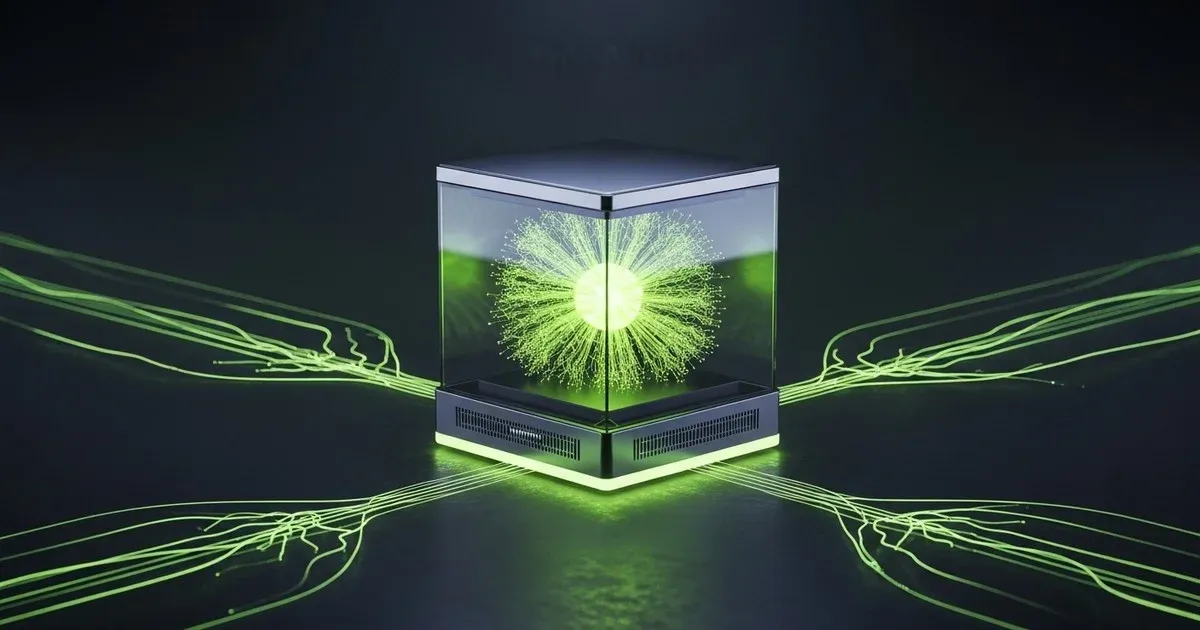
The home server isn’t just back—it has evolved. We don’t call them “media centers” or “NAS” anymore. They are Personal AI Nodes.
The Hardware Tipping Point
The primary reason for this renaissance is the democratization of NPUs (Neural Processing Units). In 2024, you needed a power-hungry GPU to run anything decent. Today, the latest ARM-based chips and dedicated AI accelerators have slashed the power-per-token ratio.
I recently set up a node using the “Vortex-6” silicon. It draws less than 15 watts while running a 14B parameter model that handles my emails, schedules, and local code refactoring. It’s quiet, it’s cheap to run, and most importantly, it’s mine.
The SLM Breakthrough
We used to think bigger was always better. But the “Inference Efficiency War” of 2025 changed the game. Small Language Models (SLMs) have been distilled to the point where a 7B or 14B model can perform reasoning tasks that previously required a massive cluster.
The secret to a great personal node isn’t just the model; it’s the RAG (Retrieval-Augmented Generation) layer. By indexing your local documents, Obsidian notes, and git repos, a local 7B model can often be more helpful than a generic cloud-based GPT-5 because it actually knows your context.
Reclaiming Digital Sovereignty
The real driver isn’t just tech; it’s a cultural shift. In 2026, privacy is no longer a “nice-to-have”—it’s a luxury that people are willing to build for themselves. When your AI assistant lives on your own hardware, you don’t have to worry about a “Terms of Service” update suddenly giving a corporation the right to train on your private thoughts.
Digital sovereignty in the AI age isn’t about being ‘offline’; it’s about owning the inference engine that interprets your life.
The “Vibe” of 2026 Self-Hosting
The software stack has also humanized. Remember the days of fighting with Docker Compose just to get a simple web UI? The new “Agentic OS” layers make self-hosting feel like installing an app on your phone. You plug it in, it scans your network (with your permission), and it starts being useful immediately.
Conclusion: Start Small
You don’t need a rack-mounted beast to join the renaissance. A modern mini-PC with an NPU is plenty. The goal isn’t to build a rival to the giant AI labs, but to build a loyal assistant that works for you, not for a shareholder.
It’s time to bring your intelligence home.
What does your local AI stack look like? I’m curious to see how you’re configuring your nodes this year. Drop me a line on X @BitTalks.
Comments
Join the discussion — requires GitHub login