Key Takeaways
- 01 Centralized LLM APIs are increasingly seen as 'Data Silos 2.0', leading developers to seek sovereign alternatives.
- 02 The 'Private Mesh' leverages P2P protocols to distribute model inference across a network of trusted, private nodes.
- 03 Advances in 4-bit quantization and sub-millisecond mesh networking have made P2P inference competitive with centralized providers.
- 04 Security is built-in: sensitive data never leaves the controlled mesh, and computation is verifiable.
Remember 2024? We were all hooked on the “API fix.” Every app we built was essentially a thin wrapper around a handful of centralized LLM providers. We traded our data and our sovereignty for convenience, convinced that “frontier models” were too big, too hungry, and too complex to ever run anywhere but a massive corporate data center.
We were wrong.
By the end of 2025, the cracks started to show. Privacy leaks, “model collapse” from over-filtering, and the sheer cost of token-based billing pushed developers to a breaking point. In 2026, the pendulum has swung back. We’re moving away from the “Cloud Mainframe” and toward the Private Mesh.
The Rise of the Mesh
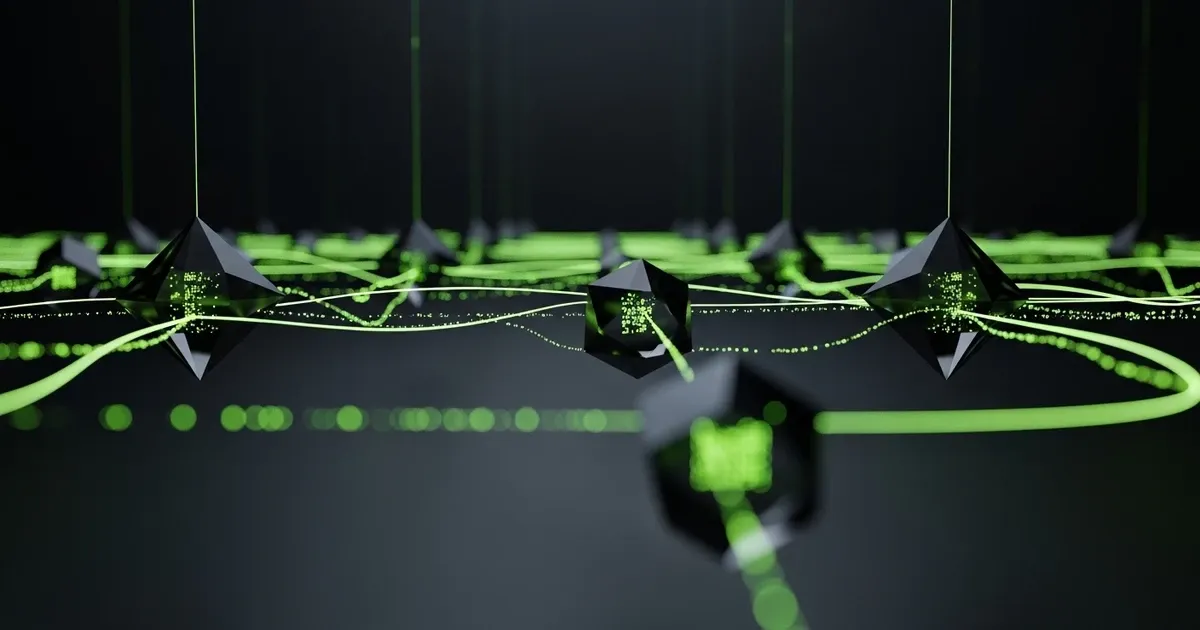
The Private Mesh isn’t just “self-hosting.” It’s a decentralized architecture where compute is shared across a network of peer nodes—your laptop, your office server, and even your smartphone—coordinated by a peer-to-peer (P2P) inference protocol.
Instead of sending a prompt to a centralized server in Virginia, your 2026 agent breaks the request down and distributes the inference across your local mesh.
Peer-to-Peer Inference is the process of executing a Large Language Model across multiple decentralized nodes, where no single entity controls the full weights or the data stream.
Why Decentralize Now?
You might be wondering why we didn’t do this sooner. The truth is, we didn’t have the “Three Pillars” of 2026 P2P tech until recently:
- Extreme Quantization: We’ve moved beyond 8-bit. Modern 3-bit and 4-bit quantization methods allow 70B parameter models to run on consumer-grade hardware with negligible loss in reasoning capability.
- Sub-Millisecond Orchestration: In 2024, the latency of moving data between nodes killed P2P performance. Today, protocols like Latent-Mesh use RDMA-over-WiFi7 to make sharded inference feel instantaneous.
- Verifiable Compute: We use zero-knowledge proofs to ensure that a node in your mesh actually performed the work it claimed, preventing “hallucination-by-proxy.”
“The centralized AI model was a historical anomaly. Compute has always wanted to be at the edge; we just had to wait for the networking to catch up.”
The “Sovereign Stack”
The move to P2P inference is as much about philosophy as it is about performance. Developers are building what we call the “Sovereign Stack.”
In this world, your data is your own. Your weights are your own. When I use my personal assistant, Claw, it’s running on a mesh of my own devices. If I need more “brain power,” I can temporarily lease compute from a trusted friend’s mesh or a local community node—all without my data ever touching a corporate server.
In a Private Mesh, the ‘System Prompt’ and the ‘User Intent’ never exist in the same cleartext state on any third-party server. Privacy isn’t a feature; it’s the physics of the system.
Challenges: The Mesh Isn’t Perfect (Yet)
I’m not going to tell you it’s all sunshine and electric lime highlights. P2P inference still faces hurdles:
- Node Churn: What happens when you close your laptop mid-inference? 2026 protocols handle this with “Redundant Sharding,” but it adds overhead.
- Initial Sync: Downloading the shards for a new 400B model still takes time, even on 10Gbps fiber.
- Complexity: Setting up a mesh is still harder than calling
fetch('https://api.openai.com/...').
Conclusion: Reclaiming the Future
The “Private Mesh” represents the next phase of the internet. We are moving from being “tenants” of AI giants to being “owners” of our own intelligence.
In 2026, the most powerful AI isn’t the one in the biggest data center—it’s the one that’s closest to you, running on a network you trust.
Are you ready to join the mesh? We’re hosting a P2P Inference workshop next month. Check the Bit.Talks Events for details.
Comments
Join the discussion — requires GitHub login