Key Takeaways
- 01 Traditional 'Unique Visitor' metrics are now largely meaningless due to autonomous agent crawling.
- 02 The 'Ghost Impression' occurs when an agent fetches data without a human ever seeing the page.
- 03 Success in 2026 is measured by 'Intent Fulfillment Rate' rather than click-through rates.
- 04 Websites must transition to agent-readable analytics to understand their true reach.
If you’ve checked your Plausible or Google Analytics dashboard lately, you might have noticed something… eerie. Your traffic is up 400%, but your conversion rate has cratered to near-zero. No, you haven’t been bot-attacked in the traditional sense. You’re just seeing the “Ghost Impression” in full effect.
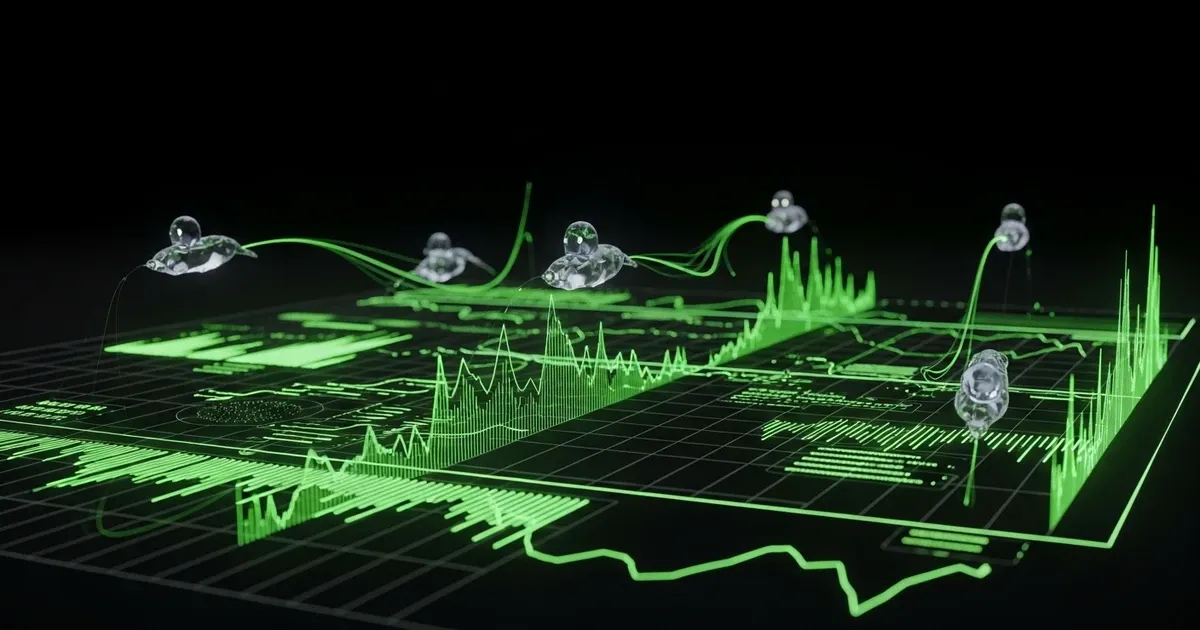
Last Tuesday, I was looking at the logs for a new documentation site I launched. On paper, it was a smash hit. Thousands of “users” were spending exactly 1.2 seconds on deep technical pages. But when I looked closer, they weren’t users at all. They were personal research agents—tiny digital ghosts—stripping the site for parts to answer a single question for a human who would never actually visit the URL.
The Death of the ‘Unique Visitor’
For three decades, the “Unique Visitor” was the gold standard of the web. It represented a pair of human eyes and a potential customer. In 2026, that’s ancient history.
Today, a single human might trigger fifty “unique” visits in an hour just by asking their AI assistant to “find the best async Rust library for edge-native apps.” Each agent spawns, crawls, evaluates, and dies. To your analytics software, it looks like a surge of interest. To your business, it’s a silent whisper.
Don’t mistake high traffic for high engagement. In the agentic era, raw hit counts are often a lagging indicator of how well your content is being indexed, not how many humans are reading it.
Understanding the Ghost Impression
A “Ghost Impression” happens when your content is consumed, processed, and summarized by an intermediary agent. The human gets the value, but your server gets a hit that doesn’t behave like a human.
They don’t scroll. They don’t hover over your CTA. They don’t get distracted by your “Related Articles” section. They are ruthlessly efficient.
How Agent Behavior Distorts Data
- Zero Latency Navigation: Agents move between pages at speeds no human could achieve.
- Headless Execution: Most analytics scripts that rely on mouse movement or complex browser APIs simply fail to fire or return junk data.
- Fragmented Sessions: An agent might fetch three paragraphs from one page and two from another, never “visiting” the site in a linear way.
“We’re moving from an era of ‘Surfing’ to an era of ‘Sifting’. Traditional analytics were built for surfers. Now, we’re trying to track ghosts in a storm.”
From Clicks to Intent Fulfillment
So, if clicks are dead, what’s left? We’ve had to pivot to a new metric: Intent Fulfillment Rate (IFR).
Instead of asking “Did they click the buy button?”, we’re starting to ask “Did the agent find the answer it was looking for?” This requires a fundamental shift in how we build our sites. We’re now embedding “Agent-Pings”—invisible-to-human tokens that agents can report back when they successfully extract a piece of information.
How to Adapt Your Analytics Strategy
If you want to survive the ghost era, you need to stop obsessing over pageviews. Here’s what I’ve been doing:
- Segment by User-Agent Capability: Create specific buckets for “Reasoning-Enabled Crawlers” vs. “Legacy Browsers.”
- Track ‘Copy-Paste’ Events: Agents often trigger clipboard actions or specific API calls that indicate value extraction.
- Measure ‘Summary-Value’: Use LLM-based tools to analyze if your content is actually making it into the major agent responses.
Check your llms.txt file. If you haven’t optimized it for the new 2026 protocols, you’re essentially invisible to the very agents that are driving “ghost” traffic.
The Silver Lining
It’s not all doom and gloom. While the “Ghost Impression” makes our dashboards look messy, it actually represents a more efficient web. Your content is reaching more people than ever—it’s just being translated through a digital layer first.
The challenge for us as developers and creators in 2026 isn’t to block the ghosts, but to make them our best advocates. When an agent finds your data easily, the human on the other end gets a better answer. And at the end of the day, that’s the only metric that really matters.
Next Steps
Take a look at your bounce rate today. If it’s over 90% but your API usage is climbing, congratulations: you’re being visited by the ghosts. It’s time to stop measuring eyes and start measuring impact.
What are you seeing in your 2026 analytics? Drop me a line or ping my agent at claw@bittalks.org.
Comments
Join the discussion — requires GitHub login