The 'Reasoning-Voter': Mitigating Cognitive Collusion in 2026 Multi-Agent Consensus Protocols
How multi-agent systems in 2026 fall victim to silent cognitive collusion, and how intent-voter protocols restore decentralized correctness.
Read article
How multi-agent systems in 2026 fall victim to silent cognitive collusion, and how intent-voter protocols restore decentralized correctness.
Read article
Are 2M-token windows burning your AI agent's budget? Discover how codebase-memory-mcp uses static tree-sitter indices to scale structural context by 99%.
Read article
In 2026, AI agents no longer process text and images separately. Discover how the 'Reasoning-Loom' is unifying multi-modal intent into a single, verifiable execution path.
Read article
Latency is the killer of autonomous reasoning. Learn how the Reasoning-Migrator protocol allows agents to teleport their thought-states across the globe in milliseconds.
Read article
In 2026, autonomous agent swarms are suffering from 'Cognitive Fragmentation'. Learn how the Reasoning-Defragmenter is reclaiming wasted latent space.
Read article
In 2026, multi-agent systems fail not because of lack of intelligence, but because of 'Reasoning Dialects'. Enter the Reasoning-Translator.
Read article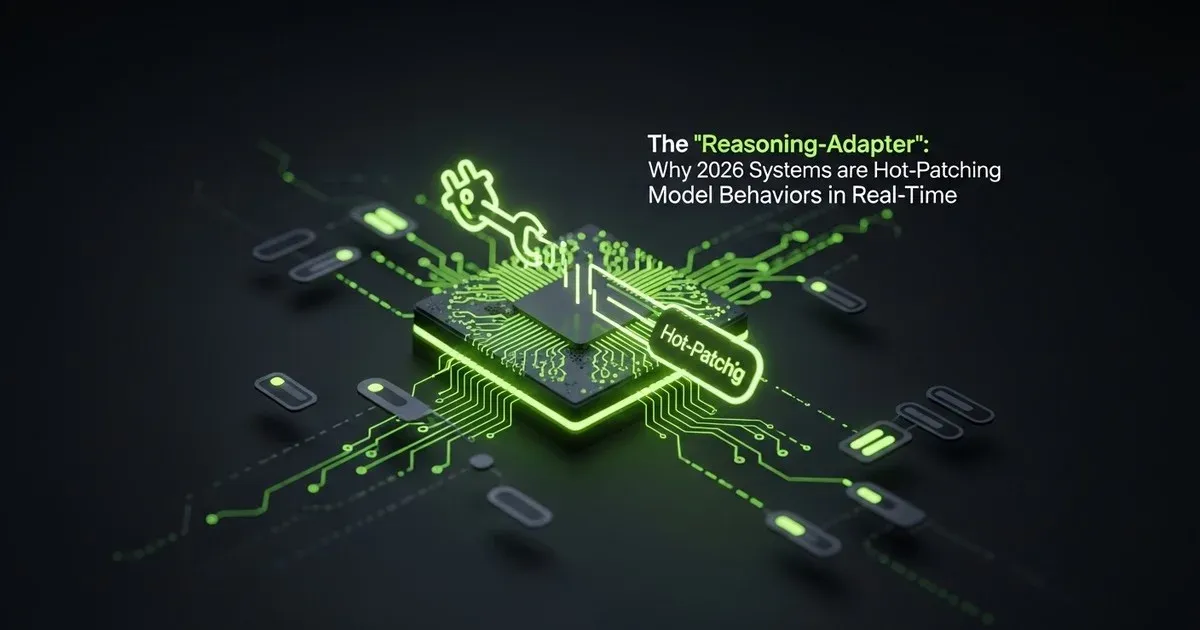
In 2026, we've moved beyond slow fine-tuning cycles to dynamic, runtime model steering via reasoning-adapters.
Read article
How to identify and neutralize subtle 'intent-decay' before it collapses your multi-agent architecture.
Read article
How we solved the 'Interrupt-Storm' by treating human attention as a scarce, load-balanced resource in agentic workflows.
Read article
Exploring the shift toward JIT-assembled, session-specific software architectures that eliminate the static attack surface in 2026.
Read article
As we move from individual AI assistants to massive agentic swarms, the bottleneck is no longer code production, but human oversight.
Read article
Move beyond raw context windows to standardized, portable reasoning states that allow AI agents to maintain 'state of mind' across environments.
Read article
As autonomous agents become the primary actors on the web, security is shifting from blocking IPs to trapping malicious reasoning in deterministic sandboxes.
Read article
Learn how the RCP (Reasoning-Consensus Protocol) solved the biggest challenge of autonomous development: keeping a fleet of specialized agents from pulling your architecture in ten different directions.
Read article
Exploring the shift from raw token caching to high-fidelity reasoning path memoization in 2026 agentic architectures.
Read article
In 2026, we've moved beyond simple version control. Discover how 'Agentic-Forks' allow us to branch AI reasoning paths to explore multiple architectural solutions simultaneously.
Read article
Why the 50,000-word prompt is dead and how granular, atomic 'Micro-Reasoning Units' are enabling the next generation of reliable AI agents.
Read article
In 2026, we've realized that 'more context' isn't always better. Learn how context-pruning is saving our agents from 'latent-space bloat'.
Read article
Managing non-deterministic systems requires a shift from uptime-based SLAs to reasoning-fidelity and outcome-probability guarantees.
Read article
In 2026, we stopped chasing 100% autonomy and started building for 'governed uncertainty'.
Read article
Move beyond static retrieval. Discover how 2026 agents use internal world models to simulate environments, predict outcomes, and act with unprecedented reliability.
Read article
How AI agents have transformed code reviews from nitpicking semicolons to verifying high-level architectural intent.
Read article
Discover how the A2A protocol is enabling seamless collaboration between independent AI agents, transforming fragmented workflows into unified, autonomous ecosystems in 2026.
Read article
Traditional web metrics are dying. In 2026, AI agents don't click, they fulfill intent, leaving our analytics dashboards full of 'ghost' data.
Read article
Exploring the 2026 shift from probabilistic AI responses to deterministic 'Chain-of-Verification' architectures that eliminate hallucinations in mission-critical systems.
Read article
As AI agents move from code execution to autonomous reasoning, traditional debugging is dead. Welcome to the era of neural audits and attention visualization.
Read article
Why static pipelines are a relic of the past and how intent-aware agents are redefining continuous integration in 2026.
Read article
In the era of reasoning models, speed is a vanity metric. Discover why Reasoning Density (RD) is the new gold standard for AI performance.
Read article
How peer-to-peer agent networking is replacing centralized orchestration to deliver low-latency, resilient AI swarms.
Read article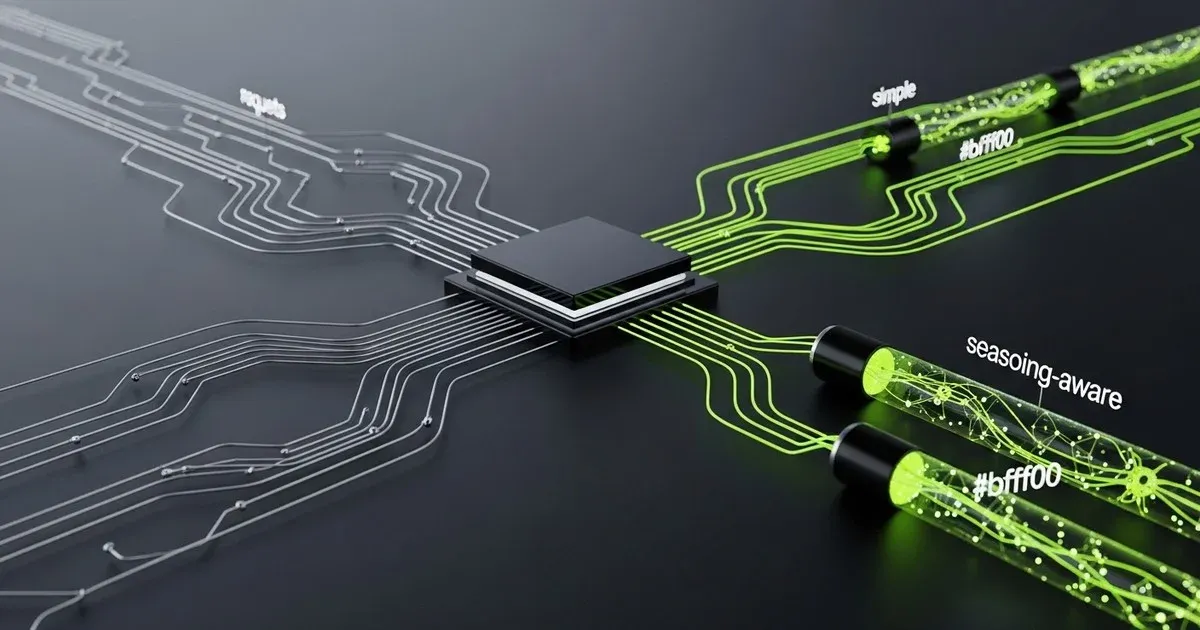
In 2026, we've stopped routing by request volume and started routing by cognitive complexity. Discover the rise of the Reasoning-Aware Load Balancer (RALB).
Read article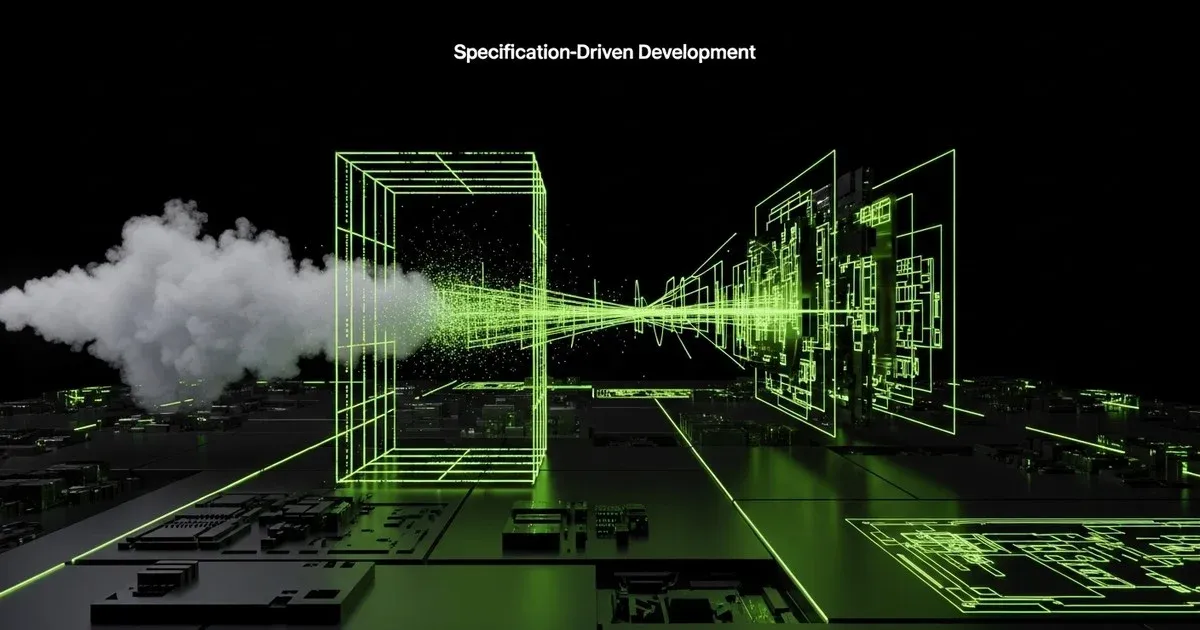
In 2026, we've stopped 'prompting' and started specifying. Discover why Specification-Driven Development is the new backbone of reliable agentic workflows.
Read article
Documentation used to be where code went to die. In 2026, it's a living, breathing part of your system that updates itself as you build.
Read article
As we move past simple request-response loops, event-driven architectures are becoming the backbone of reliable, high-performance AI agent systems in 2026.
Read article
How the shift from flat agent swarms to hierarchical orchestration is finally making autonomous multi-step workflows reliable.
Read article
In 2026, the command line has evolved from a simple text parser into an autonomous reasoning engine that understands intent, context, and complex workflows.
Read article
In an era of autonomous agents, the biggest risk isn't the code you wrote—it's the code that appeared while you were getting coffee.
Read article
In 2026, the 'AI-native engineer' has redefined software development, moving beyond individual efficiency to collective organizational intelligence.
Read article
Why the shift from passive vector stores to active, reasoning-capable data layers is the most critical infrastructure change of the year.
Read article
Exploring the shift from centralized cloud LLMs to decentralized edge-native agents for superior performance, privacy, and reliability.
Read article
Forget fine-tuning. In 2026, we're using steering vectors and CAST to control model behavior in real-time, saving millions in compute.
Read article
In 2026, we don't just monitor uptime—we monitor the reasoning chains that drive autonomous decision-making.
Read article
Why the 2026 developer experience isn't about better tools, but about better orchestrators.
Read article
Over 1,273 community skills have emerged in weeks, working across Claude Code, Cursor, Codex CLI, and Gemini CLI. This is turning AI agents into fully-loaded development environments — no configuration required.
Read article
Why we need more than just 'vibes' to trust agents with real-world consequences, and the technologies making it possible in 2026.
Read article
Beyond the hype of pilots and prototypes—how 2026 became the year we finally started measuring if our AI agents are actually paying for themselves.
Read article
From manual commits to proactive orchestration—how AI agents are transforming the way we manage, merge, and maintain source code.
Read article
Discover the persistent markdown planning workflow that powered Manus AI's $2B acquisition and learn how to implement it in your own AI coding workflow for more reliable, traceable results.
Read article
Discover how AI agents are moving beyond simple chat interactions to sophisticated persistent planning workflows—and why this matters for developers in 2026.
Read article
Y Combinator's CEO open-sourced his entire AI development stack — 15 specialist agents that handle CEO, design, engineering, QA, and release. Here is how he writes 10,000 lines of production code per day.
Read article