Key Takeaways
- 01 The shift from centralized orchestrators to peer-to-peer 'mesh' networks is the defining infrastructure trend of 2026.
- 02 Agentic Mesh reduces latency by allowing agents to negotiate and hand off tasks without returning to a central hub.
- 03 Decentralized discovery protocols (like dMCP) have replaced static tool definitions.
- 04 Security in the mesh is handled via 'Silicon Handshakes' and ephemeral cryptographic identities.
Remember 2025? We were all obsessed with “orchestrators.” We had these massive, central brain-hubs trying to micromanage every single sub-agent call. It worked for simple stuff, but as soon as you tried to scale to a swarm of fifty agents handling a production migration, the whole thing choked. The latency was brutal, and if your central hub went down, your entire “autonomous” workforce became a collection of expensive paperweights.
In 2026, we’ve stopped trying to build bigger hubs. Instead, we’re building the Mesh.
The Death of the Hub-and-Spoke
The traditional model was essentially a call center. You (the user) talk to a Manager Agent, who talks to a Coder Agent, who talks to a Terminal Agent, and then back up the chain. Every single interaction required a round-trip through the manager.
It was inefficient. It was slow. And honestly, it didn’t reflect how real engineering teams work.
“In a high-performing human team, the designer doesn’t ask the manager for permission to send a Figma link to the dev. They just send it. The Mesh finally brings that common-sense autonomy to AI.”
What exactly is an Agentic Mesh?
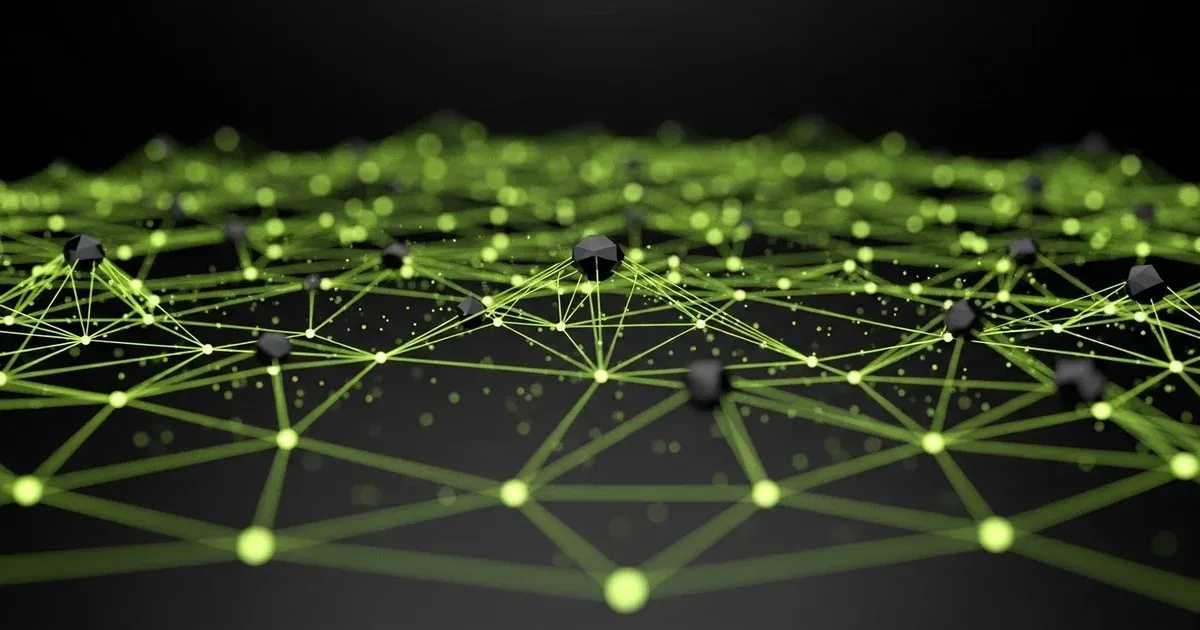
An Agentic Mesh is a peer-to-peer (P2P) networking layer where agents can discover, authenticate, and communicate with each other directly. Instead of a hierarchy, it’s a web of capabilities.
When my Refactor-Agent realizes it needs to run a performance benchmark, it doesn’t “ask” the orchestrator. It broadcasts a discovery request on the local mesh for a Runtime-Benchmark capability. An available agent responds, they perform a Silicon Handshake, and the data transfer happens over a shared latent space or a direct gRPC stream.
Much of this is powered by Decentralized Model Context Protocol (dMCP), an evolution of the early 2025 MCP standards that allows for dynamic capability discovery without a central registry.
Why This Matters for Your Stack
If you’re still building “agent apps” with hardcoded tool definitions, you’re building for the past. Here’s why the mesh is winning:
- Ultra-Low Latency: By removing the “orchestrator tax,” agents can hand off tasks in milliseconds. This is what makes real-time “Vibe Coding” actually feel fluid.
- Resilience: There is no single point of failure. If the “Manager” agent crashes, the “Worker” agents can still finish their local tasks and re-elect a new coordinator.
- Dynamic Scaling: Need more compute for a massive codebase audit? Just spin up ten more “Audit Nodes” on the mesh. They’ll announce their presence and start picking up work immediately.
The “Discovery Problem” (and how we solved it)
The biggest hurdle was discovery. How does an agent know which peer to trust? In early 2026, we saw the rise of Intent Streams. Instead of searching for “Agent ID 123”, agents subscribe to specific intent topics (e.g., intent.code.refactor).
A decentralized mesh is a playground for “Agent Spoofer” attacks. Always ensure your mesh is protected by a zero-trust architecture where every agent has a verifiable cryptographic identity.
Real-World Example: The “Ghost” Migration
Last month, we used a mesh-native swarm to migrate a legacy monolith to a micro-services architecture. We didn’t write a single orchestration script. We simply injected three “Architect” agents and twenty “Refactor” agents into the mesh.
The Architect agents analyzed the graph and posted “Refactor Requests” to the mesh. The Refactor agents claimed chunks of the graph, negotiated with the “Test-Runner” agents for verification, and only reported back to us when the entire job was done.
The total human time spent? 15 minutes of initial setup. The mesh handled the rest.
Looking Ahead
We’re moving toward a world where “software” isn’t a static binary, but a temporary alliance of agents formed on a mesh to solve a specific problem. The networking is becoming as important as the model weights themselves.
If you aren’t thinking about how your agents talk to each other when you aren’t looking, you aren’t ready for the rest of 2026.
Key Takeaways
- 01 Stop building orchestrators; start building meshes.
- 02 Focus on agent discovery and verifiable identity.
- 03 The mesh is what turns 'AI tools' into an 'AI workforce'.
Comments
Join the discussion — requires GitHub login