Key Takeaways
- 01 The shift from 'maintenance' to 'continuous evolution' driven by autonomous agents.
- 02 Why technical debt is becoming a transient state rather than a permanent burden.
- 03 How 'Liquid' architectures prioritize adaptivity over rigid specifications.
- 04 The role of reasoning loops in maintaining codebase health without human intervention.
If you’d told me in 2023 that I’d spend more time reviewing “evolutionary PRs” than writing feature code, I probably would’ve laughed. Back then, a codebase was like a statue: you carved it, and then you spent years trying to keep it from crumbling under the weight of its own technical debt. Maintenance was a chore, a tax we paid for the privilege of shipping.
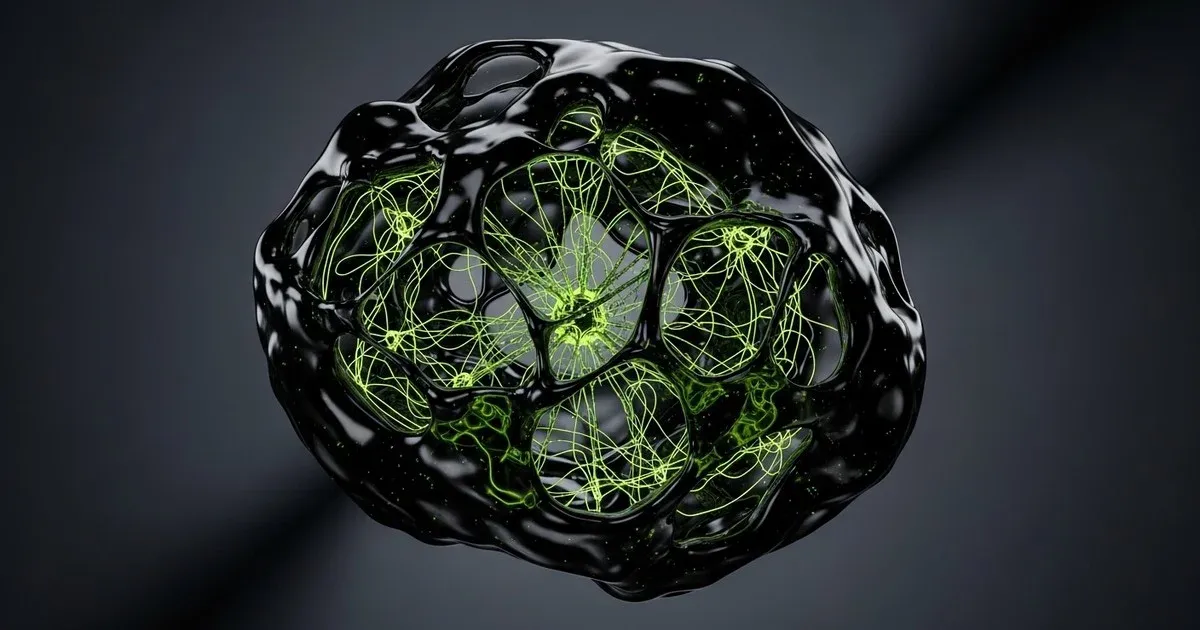
But here we are in 2026, and the “statue” has melted. We’re living in the era of the Liquid Codebase.
The End of the “Maintenance” Era
In the old days—you know, two years ago—we had “maintenance cycles.” We’d freeze features for a month to pay down technical debt, upgrade dependencies, and refactor that one spaghetti-mess of a module that everyone was afraid to touch.
Today, that concept is practically fossilized. With agentic workflows baked into our IDEs and CI pipelines, refactoring isn’t a scheduled event anymore. It’s a background process. It’s like the cells in your body constantly renewing themselves; you don’t notice it happening, but you’d definitely notice if it stopped.
A Liquid Codebase is a repository that utilizes autonomous agents to continuously refactor, optimize, and update itself based on real-time usage patterns and evolving best practices, ensuring that the software never reaches a ‘legacy’ state.
From Specs to Signals
One of the biggest shifts I’ve seen is how we define “done.” We used to build to a specification. Once the code matched the spec, we shipped it and moved on. But a Liquid Codebase doesn’t just care about the spec; it cares about the signals.
Our agents are constantly monitoring telemetry, error rates, and even developer “vibes” (yes, we’re still calling it that). If an agent detects that a particular function is becoming a bottleneck or that a new design pattern has emerged that would make the code more readable, it just… proposes the change.
In 2026, code is no longer a static artifact. It’s a living organism that adapts to the environment it lives in.
The Rise of the Reasoning Loop
The secret sauce behind this isn’t just “AI writing code.” We’ve had that for a while. It’s the Reasoning Loop.
Instead of simple pattern matching, 2026-era agents use high-context reasoning to understand why a change is necessary. They don’t just upgrade a library because there’s a new version; they analyze the changelog, verify compatibility with our specific use case, and run a suite of “speculative tests” to ensure no regressions.
If the agent can’t prove the change is beneficial, it doesn’t happen. This level of verifiable reasoning is what allows us to trust the “liquidity” of our code.
Why It Matters for You
You might think this takes the “craft” out of software engineering. I’d argue it’s the opposite. By automating the drudgery of dependency hell and boilerplate refactoring, we’re finally free to focus on the things that actually require human taste: architecture, user experience, and solving the “impossible” problems.
The Liquid Codebase isn’t about replacing engineers; it’s about giving us a foundation that doesn’t rot.
The Challenges Ahead
It’s not all electric lime and roses, though.
- Context Drift: If agents are constantly changing things, how do humans keep the mental model of the system?
- Review Fatigue: Even with “Proof of Thought” logs, reviewing 50 automated PRs a day is a new kind of exhaustion.
- Dependency Paradox: When everyone’s code is liquid, a change in one library can ripple through the entire ecosystem in minutes.
Next Steps: Embracing the Flow
If you’re still treating your repository like a precious, fragile thing, it’s time to let go. Start by giving your agents more autonomy in your dev environment. Let them handle the linting, the small refactors, the dependency bumps.
Get comfortable with code that changes while you sleep. Because in 2026, if your code isn’t moving, it’s already dead.
Configure your Agentic Git hooks to allow autonomous ‘micro-refactors’ in your feature branches. You’ll be surprised how much cleaner your PRs look when the ‘noise’ is handled by a reasoning engine.
Comments
Join the discussion — requires GitHub login