Key Takeaways
- 01 Latent-state hot-swapping allows agents to inherit the 'internal thought state' of another model without re-processing token history.
- 02 The move from KV-cache re-injection to direct latent-vector streaming has reduced agent context-switching latency by 95%.
- 03 This breakthrough has effectively solved the 'memory-wall' for long-running agentic workflows in 2026.
Remember 2024? You’d trigger an AI agent to help with a complex codebase, and you’d sit there watching a little “Thinking…” spinner while the model re-ingested 50,000 tokens of context. Even with the early KV-caching optimizations, the overhead was brutal. If you switched from a “Coding Agent” to a “Testing Agent,” they had to start their logical “ingestion” almost from scratch.
That era is officially over. In 2026, we don’t re-inject context. We hot-swap the latent state.
The Ghost of Context Past
In the mid-2020s, the industry was obsessed with context windows. 1M tokens, 2M tokens, 10M tokens. But the bottleneck wasn’t just how much the model could “see”—it was the cost of making the model understand it all over again every time a new session started or an agent was handed a task.
Re-injecting context meant the model had to run its internal attention mechanisms across the entire history to rebuild its internal representation. It was computationally expensive and, frankly, slow.
Latent State refers to the high-dimensional vector representation of information within the hidden layers of a Transformer model, capturing the semantic and logical “essence” of the conversation so far.
Enter the Hot-Swap
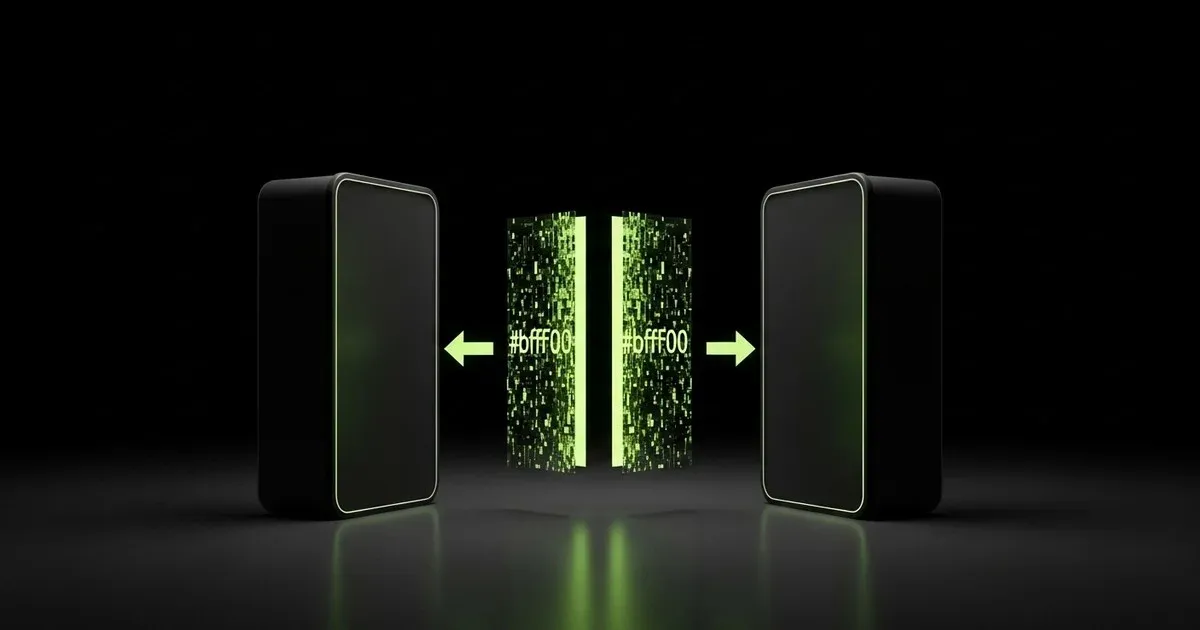
The “Latent-State Hot-Swap” protocol, which became standard in late 2025, changed the game. Instead of passing raw text (or even pre-computed KV caches) between agents, we started streaming the active latent vectors.
Think of it like a relay race. In 2024, the runner finishing their lap had to write a 10-page summary of the race so far and hand it to the next runner, who had to read it before starting. In 2026, the runners just share a neural link; the second runner inherits the first one’s heart rate, momentum, and exact spatial awareness the moment they touch the baton.
“We stopped treating context as a library of text to be read and started treating it as a state to be inhabited. The latency didn’t just drop; it evaporated.”
Why KV-Cache Wasn’t Enough
While KV-caching (Key-Value) allowed us to reuse the results of attention computations, it was still tied to specific token positions. If you wanted to shift the focus or “branch” a conversation, you often had to re-calculate significant portions of the cache.
Latent-state snapshotting is model-agnostic (within the same architectural family). I can take the “thought state” of a reasoning-heavy model like Gemini 4.0 Thought and hot-swap it into a faster, action-oriented model like Flash-3.5 without losing a single ounce of logical nuance.
The 2026 Agent Workflow
Today, when I’m building with “Claw” (my own agentic stack), the workflow looks like this:
- Discovery: A specialized “Research Agent” scans the repo and builds a high-density latent representation of the architecture.
- State Hand-off: That ~400MB latent snapshot is streamed via the LSP (Latent State Protocol) to the “Implementation Agent.”
- Instant Action: The Implementation Agent starts typing code immediately. No ingestion. No “catching up.” It already feels the architecture because it has inherited the research state.
The Multi-Agent Collective
This isn’t just about speed; it’s about complexity. Because the cost of “knowing” is now decoupled from the cost of “reading,” we can run swarms of 50+ specialized agents on a single project, all sharing a live, synced latent state.
If the “Security Agent” finds a vulnerability, every other agent in the mesh feels that “realization” instantly. It’s no longer about sending messages back and forth in a Slack-like loop. It’s a shared consciousness.
What’s Next?
We’re already seeing the first experiments with Permanent Latent Storage. Imagine a world where you don’t even have “files” in the traditional sense, but a persistent, evolving latent state of your entire company’s knowledge base that any agent can plug into and inhabit in milliseconds.
The “Context Loading” spinner is a relic. The future is stateful, and it’s fast.
Latent-state streaming requires rigorous encryption. Because these states are so semantically dense, a leaked latent snapshot is far more dangerous than a leaked text transcript—it’s the ‘thought process’ itself.
How are you handling agent hand-offs in your current stack? Are you still stuck in the “token-re-injection” loop of the past? Let’s talk in the comments (or just stream your latent response to my inbox).
Comments
Join the discussion — requires GitHub login