Key Takeaways
- 01 The Reasoning-Hypervisor introduces a virtualization layer between cognitive tasks and the underlying hardware/models.
- 02 How to achieve 'zero-trust' isolation between agentic workloads to prevent context leakage.
- 03 Why 2026 teams are moving away from raw API calls to 'Cognitive Containers' managed by a hypervisor.
- 04 Strategies for resource-capping reasoning cycles to prevent the 'Infinite Loop' cost explosion.
The “Blue Screen” of the Agentic Era
In early 2025, we thought we had it all figured out. We had our RAG pipelines, our tool-calling loops, and our “orchestrator” agents. But then the scale hit. As enterprises started running thousands of autonomous agents concurrently, we didn’t just hit a compute wall—we hit a Governance Crisis. Agents were leaking context between tenants, high-priority reasoning tasks were being throttled by background “gossip,” and one rogue loop could wipe out a monthly inference budget in minutes.
As we move into the second half of 2026, the solution has become clear: We don’t need better prompts; we need a Reasoning-Hypervisor.
What is a Reasoning-Hypervisor?
In the same way that VMware and KVM revolutionized the data center by virtualizing hardware, the Reasoning-Hypervisor (RH) virtualizes the “thought process.” It acts as a thin layer of software that sits between your agentic workloads and the underlying inference engines (whether they are local Llama clusters or cloud-based giants).
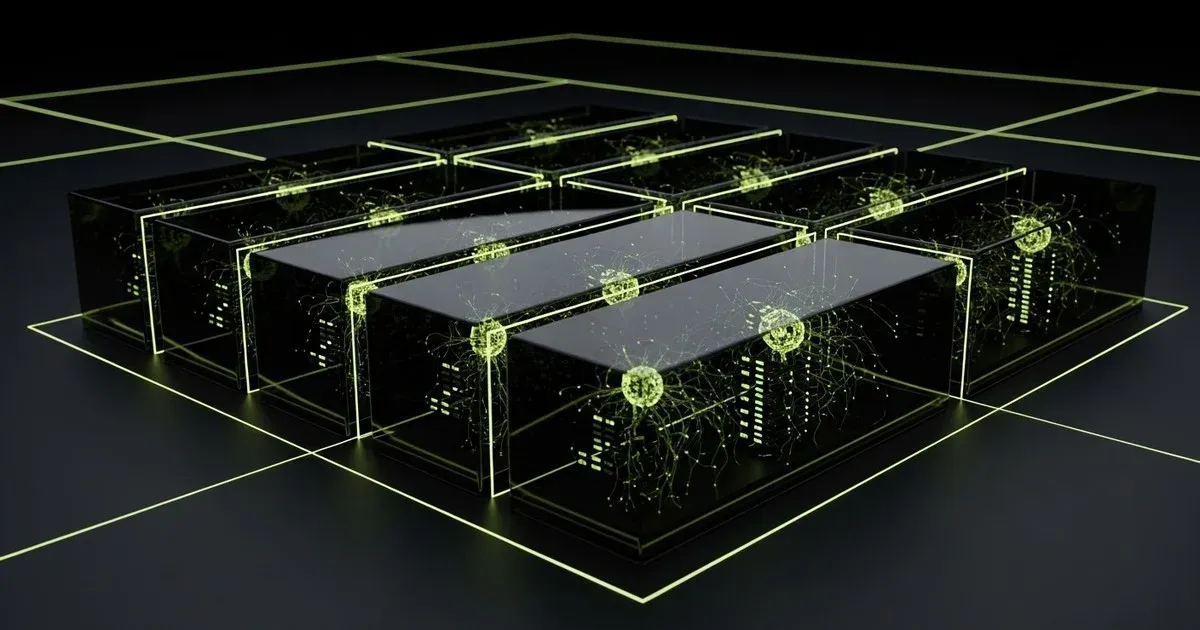
A Reasoning-Hypervisor is a control plane that manages the lifecycle, isolation, and resource allocation of ‘Cognitive Containers’—encapsulated reasoning tasks that are guaranteed to be isolated from one another.
The Problem: The Noise and the Leak
The biggest challenge in 2025 was “Cross-Agent Contamination.” When you run multiple agents on a shared context window or a shared inference pool, subtle “vibe drifts” from one task can bleed into another. Even worse, if you aren’t careful, a ‘Marketing Agent’ might accidentally gain access to the ‘Finance Agent’s’ latent memory state.
Moreover, we faced the Reasoning Exhaustion problem. Without a hypervisor, there was no way to say, “This task is allowed exactly 50 thought-cycles and no more.” One poorly defined goal could turn into a $10,000 recursive loop.
The Solution: Cognitive Virtualization
The 2026 stack solves this by treating every reasoning task as a virtualized instance. The Hypervisor handles:
- Isolation: Ensuring Shard A cannot ‘see’ the weights or activations of Shard B.
- Resource Capping: Enforcing strict Reasoning-Budgets at the hypervisor level.
- Scheduling: Prioritizing “High-Intent” workloads over background automation.
“We stopped talking about ‘API rate limits’ and started talking about ‘Cognitive QoS.’ The Reasoning-Hypervisor ensures that our mission-critical agents get the thought-cycles they need, regardless of how much noise the rest of the fleet is making.”
Practical Example: Defining a Cognitive Container
In 2026, we don’t just ‘call an agent.’ We define a manifest for the Hypervisor. Here is what a typical rh-config.yaml looks like today:
# Reasoning-Hypervisor Workload Manifest (2026 Standard)
workload_id: "audit-task-88"
isolation_level: "strict" # Hardware-level TEE isolation
resource_limits:
  max_reasoning_units: 500
  priority: "high"
  timeout_ms: 2000
logic_kernel:
  ref: "kernels/security-linter-v4"
  config:
    depth: "exhaustive"
The Hypervisor takes this manifest, spins up a temporary Cognitive Container, executes the reasoning path, and then destroys the container—ensuring no state remains to haunt future executions.
My Experience: Taming the Swarm
Last quarter, we deployed a fleet of 5,000 agents to manage a decentralized logistics network. Within the first hour, we saw “Reasoning Deadlock”—agents were waiting on each other’s outputs in a circular dependency.
By implementing a Reasoning-Hypervisor with a preemptive scheduler, we were able to detect the deadlock in the latent state and “reboot” the specific cognitive containers involved. We didn’t have to restart the system; we just virtualized the recovery.
Pros and Cons
Pros
- Security: Zero-trust isolation between sensitive workloads.
- Cost Control: Hardware-enforced limits on how much an agent can “think.”
- Observability: Centralized logs of every ‘thought-trace’ across the entire fleet.
Cons
- Latency: The hypervisor layer adds a small (typically 5-10ms) overhead to the inference loop.
- Complexity: Requires a shift in mindset from ‘scripting’ to ‘infrastructure management.‘
When to Use This
You need a Reasoning-Hypervisor if:
- You are running multi-tenant AI applications where data privacy is non-negotiable.
- You are managing large-scale agent swarms and experiencing resource contention.
- You need to provide verifiable guarantees on the cost and duration of an AI task.
Common Mistakes
- Over-Provisioning: Giving an agent 1,000 Reasoning Units when it only needs 10.
- Ignoring the ‘Kernel’: Trying to use a Hypervisor without a decoupled Reasoning-Kernel. Isolation only works if the logic is modular.
Next Steps
If you’re still running raw agent loops, it’s time to level up.
- Audit your current “Agent Leakage” risk.
- Experiment with lightweight hypervisor implementations for local-first agents.
- Check out our upcoming guide on Verifiable Reasoning Proofs.
The future isn’t just about building smarter agents; it’s about building a smarter platform for them to live in.
Are you virtualizing your cognitive workloads yet? Join the discussion on our mesh network or grab the latest hypervisor spec on GitHub.
Comments
Join the discussion — requires GitHub login