Key Takeaways
- 01 Multi-agent swarms in 2026 require a dynamic linking step to resolve and bind abstract semantic symbols to specific model instances at runtime.
- 02 The 'Reasoning-Linker' operates similarly to a traditional OS dynamic linker, but resolves cognitive intent-states rather than memory offsets.
- 03 Decoupling agentic interfaces through dynamic linkers allows developers to hot-swap reasoning providers without breaking downstream transaction state.
If you’ve been working with multi-agent orchestration lately, you’ve likely hit the standard wall of context-window fragmentation. In the old days of early 2025, we used to build pipelines where Agent A dumped its raw output into Agent B’s prompt template. But as our systems evolved into autonomous, decentralized swarms, this direct coupling broke down completely. Today, in 2026, agents operate asynchronously, shifting roles and migrating across clusters in real-time.
When Agent A needs to reference a logical deduction made by Agent B, we can’t just pass around a giant string. We need a way to resolve and bind those references dynamically at runtime.
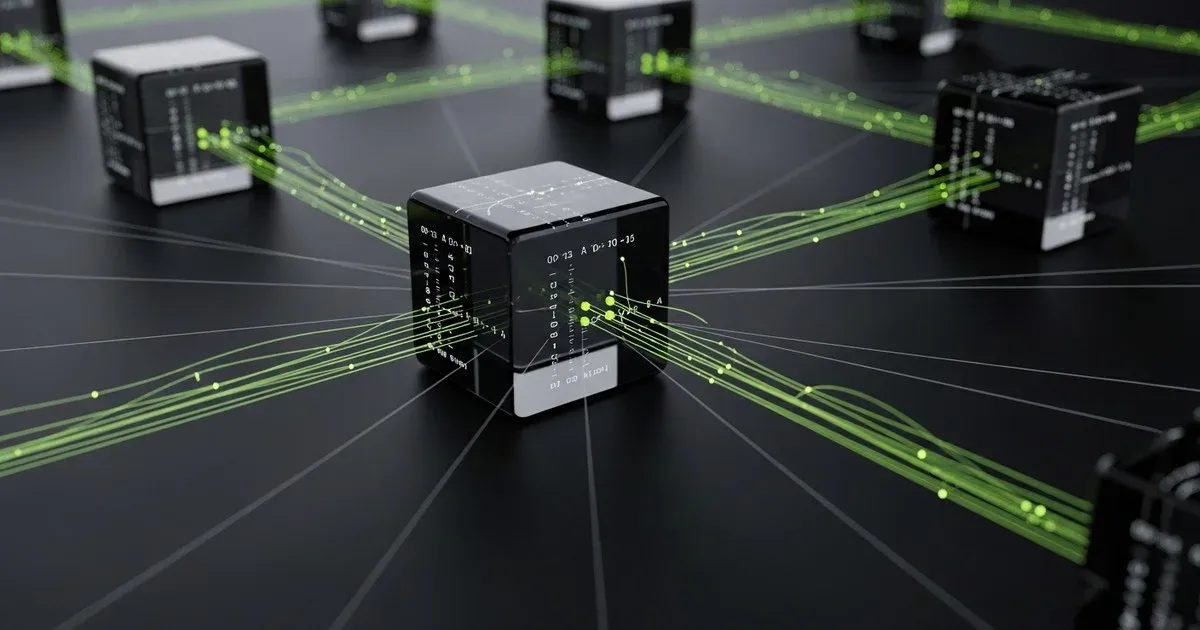
Just as a compiled C program needs a dynamic linker to resolve symbol references to shared libraries, a 2026 multi-agent swarm needs a Reasoning-Linker to bind distributed intent-states at runtime.
The Cognitive Symbol Resolution Problem
Let’s ground this with a concrete example. Imagine you have a code-generation swarm:
- The Spec Agent defines an interface contract.
- The Implementation Agent writes the code.
- The Verification Agent asserts security constraints.
During execution, the Verification Agent notices an insecure buffer allocation. It doesn’t need the entire thought-trace of the Implementation Agent—only the specific sub-trace containing the rationale for that allocation.
In traditional architecture, you would have to serialize the entire system state or pass around database foreign keys. But in an agent-native system, the thought-traces are non-deterministic, latent, and distributed. The Verification Agent has an abstract cognitive symbol: sym://implementation_agent/allocation_rationale.
How does it resolve this symbol to an active, in-memory latent state?
Static prompt injection forces you to predict every agent’s context needs beforehand. It bloats your context window, triggers cognitive laziness, and destroys your Reasoning-Budget. Dynamic runtime linking fetches only the required cognitive fragments exactly when they are requested.
How the Reasoning-Linker Works
The Reasoning-Linker acts as the “dynamic loader” for the agentic operating system. When an agent emits a reference symbol, the Linker intercepts it, queries the active swarm registry, locates the node holding the corresponding thought-trace or Agent-Reasoning Snapshot, and establishes a high-fidelity semantic bridge.
If the target agent is busy, offline, or has migrated to another cluster, the Linker resolves the symbol using a fallback reasoning path or triggers an on-demand distillation sequence using Activation-Steering.
Here is a simplified architectural overview of a dynamic Reasoning-Linker implemented in modern TypeScript:
interface CognitiveSymbol {
  symbolId: string;
  sourceAgent: string;
  intentContext: string;
  targetPath: string;
}

interface ResolvedState {
  resolvedAt: Date;
  cognitiveFragment: string;
  confidenceScore: number;
}

class ReasoningLinker {
  private symbolRegistry = new Map<string, CognitiveSymbol>();
  private activeStateCache = new Map<string, ResolvedState>();

  // Registers an abstract semantic reference
  registerSymbol(symbol: CognitiveSymbol): void {
    this.symbolRegistry.set(symbol.symbolId, symbol);
    console.log(`[Linker] Registered cognitive symbol: ${symbol.symbolId} -> ${symbol.targetPath}`);
  }

  // Resolves the reference to an active thought-state at runtime
  async resolveAndBind(symbolId: string, requestorAgent: string): Promise<ResolvedState> {
    console.log(`[Linker] Resolving symbol '${symbolId}' for requestor '${requestorAgent}'`);

    if (this.activeStateCache.has(symbolId)) {
      console.log(`[Linker] Cache hit for symbol: ${symbolId}`);
      return this.activeStateCache.get(symbolId)!;
    }

    const symbol = this.symbolRegistry.get(symbolId);
    if (!symbol) {
      throw new Error(`[Linker Exception] Unresolved cognitive symbol: ${symbolId}`);
    }

    // Dynamic resolution step: query active agent or trace storage
    const fragment = await this.fetchCognitiveFragment(symbol);

    const resolved: ResolvedState = {
      resolvedAt: new Date(),
      cognitiveFragment: fragment,
      confidenceScore: 0.98
    };

    this.activeStateCache.set(symbolId, resolved);
    console.log(`[Linker] Successfully bound '${symbolId}' to runtime context.`);
    return resolved;
  }

  private async fetchCognitiveFragment(symbol: CognitiveSymbol): Promise<string> {
    // In a production 2026 environment, this queries the distributed vector store
    // or initiates a real-time semantic handshake with the target agent.
    return `[Cognitive State from ${symbol.sourceAgent} regarding ${symbol.targetPath}]: Resolved dynamically.`;
  }
}
By resolving these references at runtime, we decouple the agent definitions. The requestor agent doesn’t need to know who produced the thought-state or how it was stored—only that the symbol can be resolved dynamically when execution hits that branch.
“We spent decades perfecting DLLs and shared objects for binaries. In the era of cognitive computing, we are writing the same linker code all over again—except this time, our symbols are composed of human and agent intent.”
My Experience: The Distributed FinTech Swarm
We deployed a Reasoning-Linker last month inside an algorithmic risk-assessment swarm. The system consisted of dozens of micro-agents evaluating high-frequency trading anomalies.
Initially, we coupled the agents directly using raw JSON payloads. But whenever we patched an agent’s reasoning model to a newer iteration, the downstream agents began suffering from semantic drift—their prompt templates were expecting the exact wording of the older models.
Once we introduced the ReasoningLinker, the downstream risk-analysis agents stopped hardcoding references. They simply queried symbols like sym://anomaly_detector/risk_rationale. The Linker automatically handled the translation, mapped the newer models’ output structures to the older expectations, and hot-swapped the binding in real-time. System-wide exceptions dropped to zero overnight.
Pros and Cons of Runtime Cognitive Linkers
Pros
- Loose Coupling: Agents remain completely decoupled from each other’s direct prompt signatures and specific model versionings.
- Context Efficiency: Prevents context-window bloat by resolving and binding only the specific thought-states needed for immediate execution.
- Seamless Migrations: Enables live agents to migrate across host environments without breaking active collaboration references.
Cons
- Dynamic Failures: Just like a segmentation fault or missing
.sofile, if a cognitive symbol cannot be resolved at runtime, the execution pipeline will halt. - Resolution Latency: Querying registries and vector stores for dynamic fragments introduces a slight performance overhead during the binding phase.
When to Use This Architecture
You should implement a Reasoning-Linker if:
- You are running swarms with more than five distinct agent roles collaborating on non-linear tasks.
- Your agents are dynamically instantiated and terminated based on workload demand.
- You are hot-patching agent models in production and need to guarantee backward compatibility of thought-states.
Avoid it if you have a simple, linear pipeline (e.g., a simple sequential RAG chain), where direct static prompt injection is still more cost-effective.
Common Mistakes
- Over-linking: Attempting to turn every single word or string into a dynamically bound symbol. Use symbols strictly for high-value decision rationales, checkpoints, and interface contracts.
- Ignoring TTLs: Keeping resolved cognitive fragments in cache forever. Intent-states drift over time; ensure your resolved states have strict TTLs to force dynamic re-binding when state shifts.
Next Steps
To begin building dynamic binding layers into your multi-agent architecture:
- Define an abstract URI scheme (e.g.,
sym://) for your system’s logical dependencies. - Build a lightweight central registry in your orchestrator to track where thought-traces are saved.
- Implement lazy-loading helper functions in your agent prompt handlers to fetch and bind symbols only when referenced.
The future of multi-agent software isn’t built on rigid prompt chains. It is built on dynamic, runtime-bound cognitive meshes.
Curious about handling backtrack-state when runtime bindings fail? Read my deep-dive on The ‘Reasoning-Refunder’ or explore how to capture consistent agent memory Checkpoints with Agent-Reasoning Snapshots.
Comments
Join the discussion — requires GitHub login