Key Takeaways
- 01 Traditional data backups only capture the 'what', but 2026 agents require the 'why'—the intent-state—to resume work effectively.
- 02 Reasoning-Backups archive the latent thought-traces and decision-making chains of autonomous systems.
- 03 Without intent preservation, a restored agent suffers from 'Context Amnesia,' leading to redundant work or logic-drift.
- 04 In 2026, 'Reasoning-Aware RPO' (Recovery Point Objective) is the new standard for enterprise resilience.
The Midnight Meltdown
Last Tuesday, at exactly 2:14 AM, our primary agent swarm for the Neo-Tokyo logistics hub went dark. A cascading failure in the edge-mesh region took out the primary reasoning cluster. In 2024, this would have been a standard database restoration job. We would have spun up the Postgres backup, pointed the apps to the new instance, and called it a night.
But this is 2026. Our logistics “apps” are actually a coordinated fleet of 500 autonomous agents managing thousands of real-time drone deliveries and warehouse bots.
When we restored the raw data, the agents woke up in a state of total confusion. They had the inventory data, but they had lost their Intent-State. They didn’t know why they were moving Package A to Dock B, or what “negotiation” they were halfway through with the municipal traffic AI.
We didn’t just need a data backup; we needed a Reasoning-Backup.
Beyond the ‘Snapshot’
For decades, Disaster Recovery (DR) was about bits on a disk. If you had the latest database snapshot and the source code, you were safe. But as we’ve moved into the era of Agentic Orchestration, the most valuable asset isn’t the static data—it’s the active reasoning process.
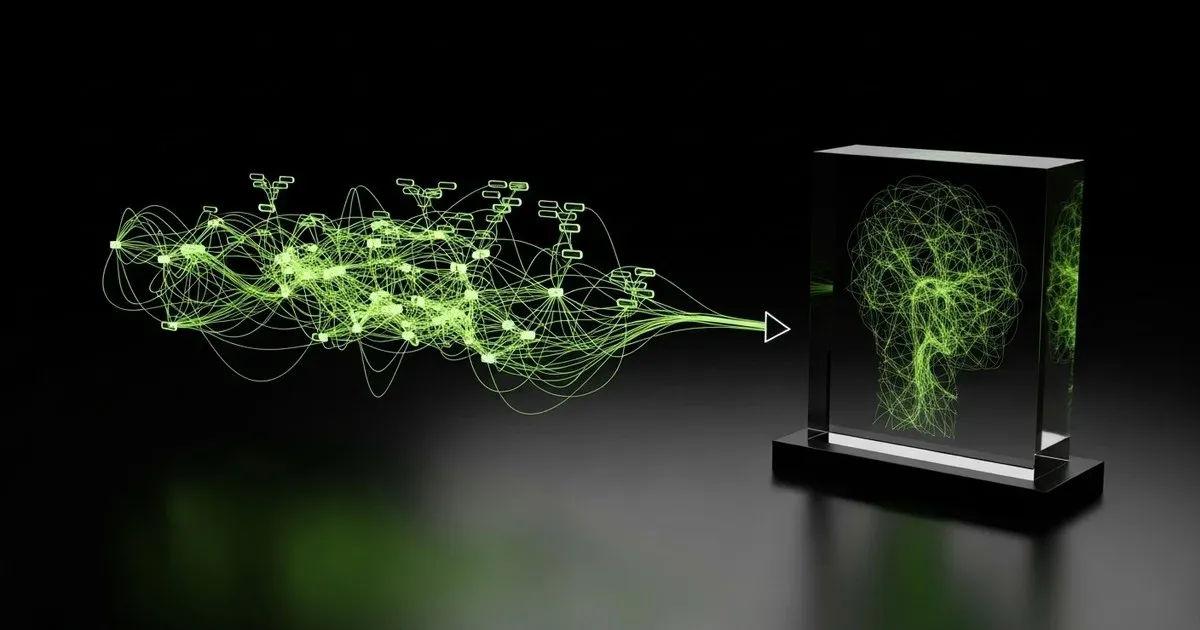
A “Reasoning-Backup” is a high-fidelity archive of an agent’s internal state: its current goals, its pending reasoning traces, its local world model, and its “uncommitted” thoughts.
Restoring data without intent is like waking up in the middle of a surgery with the medical records but no memory of the last three hours. You have the facts, but you’ve lost the thread.
The Problem: Context Amnesia
When an agent is restored without its reasoning context, it suffers from what we call “Context Amnesia.” It sees the current state of the world but lacks the “provenance of intent” that led there.
- Redundant Reasoning: The agent starts its tasks over from scratch, wasting expensive Reasoning Units.
- Logic Drift: The restored agent might reach a different conclusion than its predecessor, causing conflicts with other agents in the swarm.
- Protocol Violations: If an agent was in the middle of a Silicon Handshake, the restored version might lack the temporary security context to finish it.
The Solution: Intent-State Persistence
In 2026, we’ve implemented the Intent-State Persistence (ISP) pattern. This involves streaming an agent’s “Thought-Traces” to a distributed, immutable log in real-time.
Think of it as a Write-Ahead Log (WAL) for reasoning.
Every time an agent makes a significant reasoning step or updates its internal goal hierarchy, it emits an ‘Intent-Delta’. These deltas are sequenced and stored. Upon recovery, a ‘Reasoning-Migrator’ (which we discussed recently) replays these deltas to reconstruct the agent’s mental state.
Practical Example: Intent-Aware Failover
Here’s a simplified look at how we define a “Reasoning-Aware” backup policy in our infrastructure-as-intent (IaI) files:
# cluster-policy-2026.yaml
service: logistics-swarm-v4
resilience_tier: ultra
backup_strategy:
  data:
    provider: S3-Z-Redundant
    frequency: 5m
  intent_state:
    provider: ReasonLog-Global
    # Capture deltas with < 100ms latency
    mode: synchronous_delta_streaming
    retention: 24h
    checkpoint_frequency: 100_thought_units
recovery_priority:
  - latent_context_injection
  - goal_hierarchy_reconstruction
  - data_sync
When the logistics swarm failed, the recovery engine didn’t just pull the DB. It pulled the last 100 thought-units for each agent and injected them directly into the new instances’ Reasoning Kernels.
The result? The agents resumed their tasks within 15 seconds, with zero “what was I doing?” overhead.
My Experience: The ‘Ghost’ in the Recovery
Early in 2025, before we standardized Reasoning-Backups, I managed a recovery for a financial agent swarm. We restored the data perfectly, but because we lost the “Intent-State,” the agents double-executed $4.2M in ‘speculative’ trades because they didn’t know they had already sent the intent-vectors to the exchange.
That was the day I realized that in 2026, data is a commodity, but intent is life.
Pros and Cons
Pros
- Near-Zero Resume Latency: Agents pick up exactly where they left off.
- Consistency: Prevents logic-drift and redundant execution.
- Auditability: You have a full “black box” recording of the reasoning that led to a failure.
Cons
- Storage Overhead: Thought-traces can be large (though Reasoning-Compression helps).
- Latency: Synchronous intent-streaming adds a slight overhead to inference cycles.
When to Use This
- High-Stakes Autonomy: Any system where an agent makes financial, physical, or security-critical decisions.
- Multi-Agent Swarms: Where coordination depends on shared, evolving context.
- Long-Running Tasks: If your agents are working on multi-day research or coding projects.
Common Mistakes
- Backing up ‘Context’ but not ‘Goals’: Knowing the text of the conversation isn’t enough; you need to know the agent’s internal “next action” queue.
- Infrequent Checkpointing: In the fast-moving 2026 mesh, a 5-minute-old intent-state is already ancient history. Use delta-streaming.
Next Steps
- Audit your RPO: Are you measuring recovery in terms of data bits or “thought cycles”?
- Implement Delta-Streaming: Move your agents’ internal state to an external persistence layer.
- Test ‘Intent-Failover’: Pull the plug on an agent and see if it knows its own name—and its current mission—when it wakes up.
Is your DR strategy still stuck in 2024? How are you handling “Context Amnesia” in your autonomous systems? Let’s discuss it in the dev-mesh.
Comments
Join the discussion — requires GitHub login