Key Takeaways
- 01 Syntactic linting is now a background commodity handled entirely by AI-native IDEs.
- 02 Reasoning-Linters audit the 'logic-path' of agent-generated code rather than just style.
- 03 The shift from ESLint to Logic-Invariants has reduced architectural drift by 70%.
- 04 Developers in 2026 are 'Logic Architects' who define invariants for agents to follow.
Remember the “Semicolon Wars” of the 2010s? Or the heated debates over trailing commas? If you mentioned those to a junior developer today, in 2026, they’d look at you like you were explaining how to hand-crank a Model T.
In the age of autonomous agents, syntax is a solved problem. If an agent writes code that doesn’t compile or violates a style guide, the IDE fixes it before the human even sees it. But as we stopped worrying about where the brackets go, we ran into a much bigger, much scarier problem: Reasoning Drift.
The Death of the Semicolon War
By mid-2025, the industry reached a tipping point. AI agents were generating 80% of production code, and they were syntactically perfect. They followed every Airbnb style guide rule ever written. But they were also occasionally hallucinating complex race conditions or breaking obscure architectural invariants that weren’t explicitly documented.
We realized that linting for syntax was like proofreading a book for typos while ignoring the fact that the plot makes no sense. We needed something deeper. We needed the Reasoning-Linter.
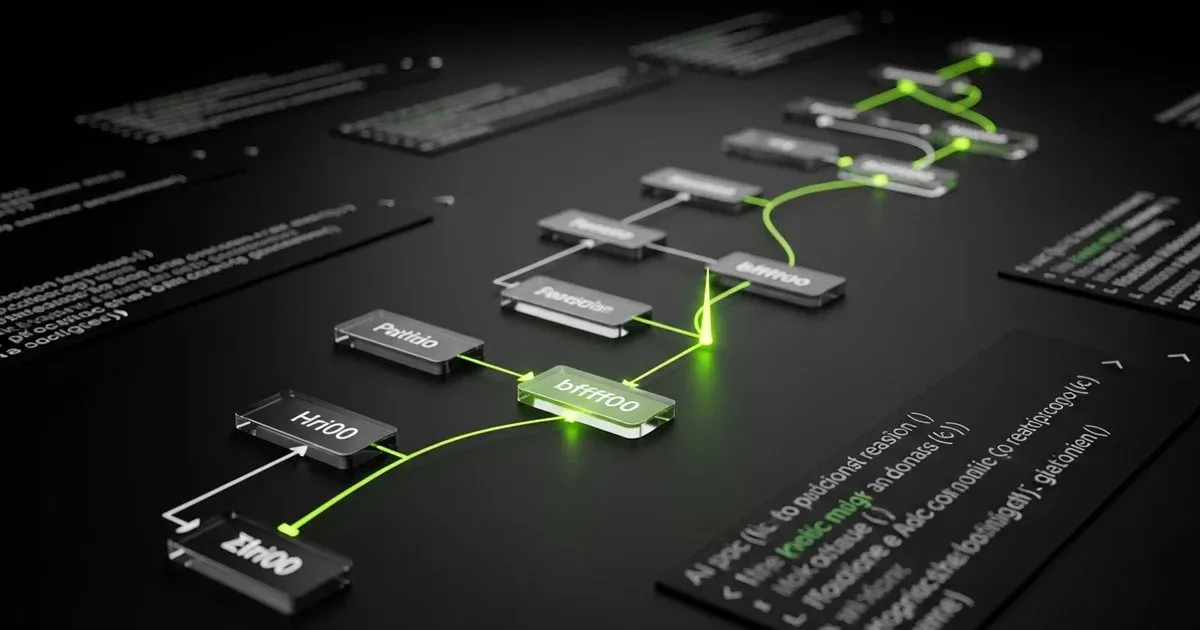
Unlike a traditional linter that checks for unused-vars, a Reasoning-Linter analyzes the thought-trace of an agent against a set of architectural constraints. It ensures the ‘why’ behind the code aligns with your system’s core logic.
Beyond Syntax: Auditing the Logic Path
A Reasoning-Linter doesn’t just look at the .ts file; it looks at the thought-log.json produced during the generation process. It asks questions like:
- “Did the agent consider the eventual consistency of the database when it wrote this cache-aside logic?”
- “Did it account for the 50ms latency spike in the authentication sidecar?”
- “Is this new function inadvertently creating a circular dependency in the reasoning-mesh?”
In 2026, we don’t write “Clean Code” anymore—we define Logic Invariants.
In 2024, I spent four hours a day on PRs checking for variable naming and logic errors. In 2026, I spend thirty minutes defining the logic-gates for our Reasoning-Linter, and the agents handle the rest.
The Shift to Invariant-Driven Development
The workflow has fundamentally shifted. Instead of writing code, we write “Logic Specs.” These aren’t just tests; they are high-level constraints that the Reasoning-Linter enforces at the moment of creation.
A Practical Example: The Transaction Guard
Imagine an agent trying to implement a multi-service payment flow. A traditional linter sees nothing wrong with a standard async/await block. But a Reasoning-Linter, configured with a Distributed-Transaction-Invariant, will flag the code if it doesn’t see a corresponding rollback logic or an idempotent check in the agent’s reasoning trace.
// The Linter now checks the reasoning, not just the code
// Logic Invariant: All payment flows must include an idempotency key
// Status: FAILED
// Reason: Agent thought-trace skipped 'idempotency-verification' step.
Why This Matters for Your Career
If you’re still priding yourself on your ability to spot a missing useEffect dependency, you’re in trouble. In 2026, the “10x Engineer” is the one who can design the most robust logic invariants. We’ve moved from being “Typists of Code” to “Auditors of Intent.”
The Reasoning-Linter isn’t just a tool; it’s a safety net for an autonomous world. It allows us to scale our engineering teams to thousands of agents without losing the “soul” or the “safety” of our architecture.
Teams adopting Reasoning-Linters have reported a 90% decrease in ‘Architectural Regressions’ and a massive boost in developer trust for autonomous deployments.
Conclusion: Setting the Guardrails
The future of development isn’t about writing less code—it’s about thinking more about the rules of that code. If you haven’t yet integrated a reasoning-audit into your CI/CD pipeline, you’re essentially flying an autonomous jet without a flight controller.
It’s time to stop linting for style and start linting for truth.
Comments
Join the discussion — requires GitHub login