Key Takeaways
- 01 Multi-modal agents in 2026 have moved from 'late-fusion' to native, cross-modal reasoning via the 'Reasoning-Loom'.
- 02 The 'Loom' architecture prevents 'modality drift'—where an agent's visual interpretation contradicts its textual logic.
- 03 Unified Action Traces allow for 100% verifiable reasoning across vision, voice, and code execution.
- 04 Enterprises are using the Loom to build agents that can 'see' a bug in a UI and 'reason' through the fix in the same thought-cycle.
If you’ve spent any time debugging multi-modal agents in 2024, you know the “late-fusion” headache. You’d have a vision model describe an image, a language model reason about the description, and a tool-caller try to act on the result. It was like playing a game of Telephone where the visual context was lost in translation.
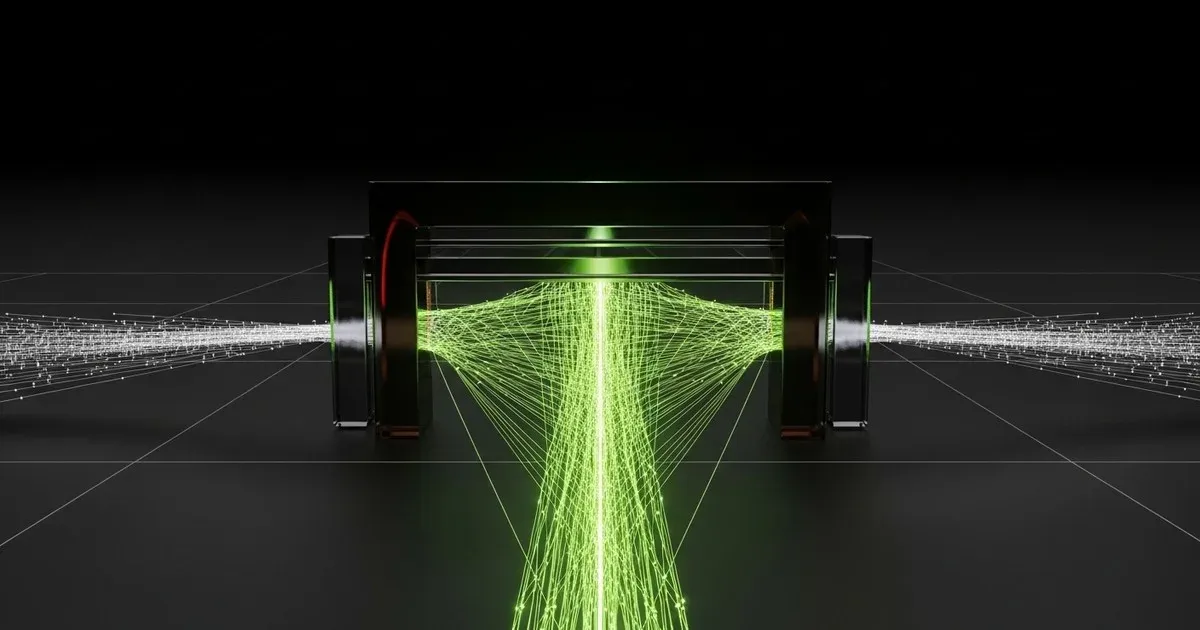
In 2026, that friction is gone. We’ve stopped stitching models together and started weaving them. Enter the Reasoning-Loom.
The End of the Modality Gap
The “Modality Gap” was the silent killer of 2025’s agent swarms. An agent would look at a dashboard, correctly identify a “red” status light, but then textual reasoning would somehow override that visual fact with a cached “green” assumption from its training data.
The Reasoning-Loom solves this by treating every modality—pixels, waveforms, tokens—as a single, high-fidelity intent vector. There is no “translation” step. The agent doesn’t see a picture and then describe it to itself; it reasons through the picture.
In 2026 architectural terms, a ‘Loom’ is a layer that interleaves cross-modal embeddings into a continuous reasoning trace. It ensures that every step of a thought-process is anchored in all available sensory inputs simultaneously.
Weaving Unified Action Traces
The breakthrough of the Loom is the Unified Action Trace. In the old days, you had logs for what the agent said and separate logs for what it did. In 2026, we have a single, verifiable log that includes the “visual evidence” for every logical jump.
The UI-to-Code Loop
Consider a common 2026 task: fixing a layout bug in a Generative UI.
- Observation: The Loom agent detects a 5px misalignment in a button component via the visual kernel.
- Hypothesis: It identifies the CSS grid conflict not by reading the code, but by “simulating” the layout in its latent space.
- Action: It generates a patch while maintaining a persistent “visual anchor” on the expected output.
“We used to build agents that could talk about the world. With the Reasoning-Loom, we’re building agents that can finally inhabit it.”
My Experience: The ‘Ghost in the Vision’
Last month, I was working on a project for an autonomous robotics lab. They were struggling with an agent that would “hallucinate” obstacles in low-light conditions. Traditional RAG wasn’t helping because the issue was in the raw visual interpretation.
We implemented a Reasoning-Loom kernel, and the difference was night and day (literally). Because the agent could now “anchor” its textual skepticism (“It is unlikely there is a wall here”) directly into the visual noise of the sensor, it started self-correcting its vision in real-time. It wasn’t just seeing; it was doubting its own sensors based on logical priors.
Pros and Cons of the Loom Architecture
Pros
- Zero Latency Translation: No more waiting for ‘Vision-to-Text’ overhead.
- Higher Fidelity: Prevents the loss of nuance that happens when an image is compressed into a text description.
- Verifiability: You can audit the exact pixel-to-token relationship in the trace.
Cons
- Compute Intensity: Weaving modalities in real-time requires significantly more Reasoning-Budget.
- State Density: The “thought-logs” for a Loom agent are massive, often requiring Reasoning-Compression before archival.
When to Use the Loom
Don’t use a Loom for simple text-based tasks. It’s overkill for writing an email or summarizing a document.
Use it when:
- The agent is interacting with a complex GUI.
- You are building autonomous hardware (robotics, drones).
- High-stakes verification is required (medical imaging analysis, structural engineering).
Next Steps
The age of the “Chatbot with Eyes” is over. We are moving toward unified cognitive entities.
- Audit your multi-modal pipelines: Are you still using late-fusion? If so, you’re losing 40% of your context.
- Experiment with Unified Traces: Start logging the relationship between visual input and logical output.
- Invest in Reasoning-Density: Focus on how much information your agent can weave into a single cycle.
The Reasoning-Loom isn’t just an optimization; it’s the moment the AI’s “senses” and “brain” become one.
Curious about how the Loom handles voice? Check out my deep dive on Agentic Protocols or find me on the mesh.
Comments
Join the discussion — requires GitHub login